Phone: +86-178-1682-8319 | Email: sales@befitter.com.cn

Views: 0 Author: Site Editor Publish Time: 2026-03-16 Origin: Site
Print finishing is no longer just about adding the final touch—it’s a crucial step where quality, efficiency, and sustainability intersect. By embracing print automation, companies can streamline every finishing process, from cutting and laminating to coating and embossing, while reducing waste and energy use. Modern digital print workflows enable precise, on-demand production that saves materials and time. Whether you run a large print operation or a smaller shop, leveraging automation not only boosts productivity but also positions your business as an environmentally conscious leader.
Print automation refers to systems that take over tasks humans usually handle in the printing process. They allow operators to focus on higher-value work while machines handle repetitive or precise tasks.
Key components of print automation include:
Software – Automates prepress checks, layout imposition, and file management.
AI tools – Adjust color, detect errors, predict maintenance needs.
Digital workflows – Seamlessly link prepress, printing, and finishing.
Automated finishing machines – Handle lamination, embossing, cutting, and coating without manual intervention.
Automation has evolved rapidly over the last decade. Early systems only managed a single step, now they control multiple processes simultaneously. It reduces human error, speeds production, and ensures consistent quality.
Printing finishing can be done manually or automatically. Here’s a quick comparison:
| Feature | Manual Print Finishing | Automated Print Finishing |
|---|---|---|
| Precision | Varies by operator skill | Consistent, exact results every time |
| Speed | Slower, requires more labor | Fast, handles large volumes efficiently |
| Error Rate | Higher, mistakes common | Low, with real-time error correction |
| Workflow Integration | Separate steps, often offline | Fully integrated digital workflow |
| Resource Use | Higher waste, paper, and ink | Optimized usage, less waste |
Automation removes repetitive human steps. It ensures finishes like cutting, embossing, or coating are identical across every print run.
Over ten years, automation shifted from optional to essential.
Early 2010s: Semi-automated systems, basic inline checks.
Mid 2010s: Introduction of color management software and inline finishing.
Late 2010s to 2025: Fully integrated workflows, AI-driven predictive maintenance, automated quality control.
Machines now can automatically detect errors, adjust ink, and schedule maintenance before problems occur. This reduces downtime and material waste.
Automation improves efficiency, reduces costs, and supports sustainability.
Digital print workflows allow operators to track jobs and manage materials in real time.
Companies adopting automated finishing machines produce high-quality, consistent output while cutting waste.
Even small print shops can benefit. Start by automating prepress checks or finishing steps. Gradually expand to fully integrated workflows.
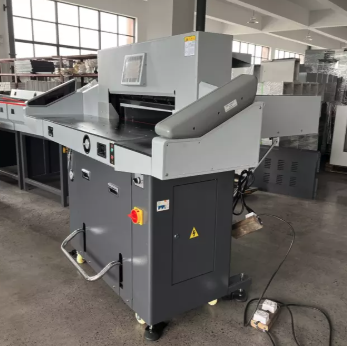
Automation isn’t just about speed or cost savings. It plays a vital role in making print finishing more sustainable. By using machines and digital workflows, companies can reduce waste, save energy, improve accuracy, and maintain consistent quality across all jobs. It also allows operators to focus on creative and high-value tasks instead of repetitive processes.
Automation ensures that every cut, fold, or coating is precise, leaving minimal scrap behind. It calculates the exact amount of paper, ink, and coating needed for each job, eliminating unnecessary use of materials.
High-volume runs: Automated systems cut and trim sheets exactly, avoiding large amounts of leftover scrap.
On-demand printing: Only the number of copies needed is printed, eliminating excess inventory.
Ink optimization: Machines adjust ink usage dynamically, reducing over-inking and color waste.
| Process | Manual Waste | Automated Waste |
|---|---|---|
| Cutting | 5–8% excess | <1% |
| Ink Usage | 10% over | 2–3% |
| Finishing | Frequent rework | Minimal |
Automation ensures not only environmental benefits but also cost savings by minimizing wasted materials.
Even skilled operators can make mistakes. Automated systems detect issues in real time before the job goes to print. They verify file integrity, alignment, and color accuracy automatically, preventing defective prints.
Benefits include:
Fewer misprints: Reduces discarded sheets caused by errors in cutting, folding, or coating.
Lower costs: Less material and labor wasted on fixing mistakes.
Real-time correction: Problems are identified and corrected automatically, ensuring every print run meets quality standards.
By minimizing human error, companies produce higher-quality prints consistently while saving time and resources.
Automated workflows streamline every stage of production, from prepress to finishing. Batch optimization and digital finishing allow multiple designs or jobs to be processed on the same sheet efficiently.
Faster production: Automation reduces setup times and accelerates job completion.
Better sheet utilization: Machines arrange layouts optimally, maximizing material usage.
Reduced downtime: Automated scheduling ensures machines move seamlessly from one job to the next.
This efficiency allows print businesses to handle larger orders and tight deadlines without compromising quality, while also reducing operational costs.
Variable Data Printing (VDP) lets companies create highly personalized prints for individual customers or campaigns. This reduces unnecessary mass printing and aligns production with actual demand.
Advantages include:
Just-in-time printing: Only the required copies are produced, reducing inventory waste.
Personalized campaigns: Custom messaging or offers increase engagement and response rates.
Flexible layouts: Designs can be adapted quickly for different markets or promotions.
Automation makes it possible to combine personalization and sustainability, delivering relevant content without overproduction.
Modern automated systems monitor machine performance using sensors and AI. They predict maintenance needs before problems occur, avoiding unexpected downtime.
Sustainability benefits include:
Less downtime: Jobs are completed on schedule, reducing waste from unfinished or delayed runs.
Fewer replacements: Machines last longer, reducing the environmental impact of producing new equipment.
Consistent output: Automated adjustments maintain high-quality production throughout the machine’s lifecycle.
Predictive maintenance ensures smoother operations while supporting long-term sustainability goals.
Automation optimizes energy use by ensuring machines only operate when needed. Idle periods are minimized, and systems adjust settings to reduce unnecessary power consumption.
Energy-efficient practices:
Smart scheduling: Machines start and stop according to job requirements, avoiding wasted energy.
Optimized settings: Automated presses adjust temperature, roller speed, and pressure for energy efficiency.
Reduced idle operation: Minimizes unnecessary electricity use when no jobs are running.
These practices lower the carbon footprint and reduce operational costs at the same time.
| Benefit | How Automation Helps | Impact |
|---|---|---|
| Waste Reduction | Precise cuts and ink control | Less material discarded |
| Error Minimization | Automated QC & file checks | Fewer reprints |
| Efficiency | Integrated digital workflow | Faster throughput |
| Customization | VDP & on-demand printing | Avoids overproduction |
| Machine Longevity | Predictive maintenance | Less equipment replacement |
| Energy Savings | Smart scheduling & idle control | Lower energy use |
Modern print operations are more than machines—they rely on data, timing, and integration to maximize efficiency. Connecting print automation to existing business systems transforms workflows, making them smarter, faster, and more sustainable.
Integrating automation into ERP (Enterprise Resource Planning) and CRM (Customer Relationship Management) systems allows seamless coordination across departments.
Key benefits include:
Job scheduling: ERP triggers print jobs based on inventory levels or production priorities.
Customer insights: CRM data ensures print materials align with client preferences or campaigns.
Resource optimization: Tracks paper, ink, and labor usage in real time.
| System | Integration Role | Impact |
|---|---|---|
| ERP | Auto-schedule jobs | Efficient production |
| CRM | Trigger customer-specific prints | Personalized output |
| Combined | Data-driven reporting | Improved ROI & sustainability |
Automation can launch printing automatically when certain triggers occur. For example:
Order confirmations: Invoices print immediately after a sale.
Promotions: Personalized offers sent to customers based on behavior.
Inventory alerts: Reorder notifications produce labels or packaging on demand.
This reduces overproduction, avoids waste, and ensures customers receive relevant materials on time. It also frees operators from manually managing routine tasks.
Data drives smarter, greener printing. Automation collects insights from ERP and CRM systems to optimize every step.
Advantages of data-driven print workflows:
Material efficiency: Only necessary sheets, inks, and coatings are used.
Reduced reprints: Real-time error checks lower defective jobs.
Faster response times: Campaigns adapt instantly to customer needs.
Cost savings: Less inventory, fewer returns, optimized labor.
| Benefit | How Data Helps | Example |
|---|---|---|
| Material Use | Tracks consumption | Print only what’s required |
| Error Reduction | Auto-check files | Fewer misprints |
| Sustainability | Optimizes energy and waste | Lower carbon footprint |
| ROI | Aligns production to demand | Reduced overhead |
A: Print automation ensures precise cuts, accurate ink usage, and optimized material consumption. It minimizes misprints, reduces overproduction, and avoids excess inventory, making operations more sustainable.
A: Cutting, folding, laminating, coating, embossing, foil stamping, die-cutting, and binding can all be automated to improve speed, consistency, and quality.
A: Initial investment can be high, but scalable digital systems and software reduce long-term costs through efficiency, waste reduction, and labor savings, making it viable for smaller shops.
A: Digital workflows integrate prepress, printing, and finishing, enabling on-demand production, error detection, and efficient resource use, reducing energy, material waste, and unnecessary reprints.
Automation is transforming how print finishing operates, combining speed, accuracy, and eco-friendly practices into a single workflow. By reducing errors, optimizing materials, and enabling on-demand printing, companies can deliver high-quality results while lowering their environmental impact.
At Hangzhou Befitter Machinery & Electronic Co., Ltd., we help businesses integrate advanced automated print finishing solutions into their operations. With our systems, you can enjoy consistent quality, reduced waste, and sustainable workflows that meet today’s production demands and tomorrow’s environmental expectations.


