Phone: +86-178-1682-8319 | Email: sales@befitter.com.cn

Views: 0 Author: Site Editor Publish Time: 2026-09-08 Origin: Site
The physical presentation of a printed document directly influences perceived authority, brand value, and user experience. This makes the final binding stage a critical production decision. Print shops and corporate offices often default to the cheapest binding method available. They fail to evaluate the long-term impact on document durability, client perception, and post-production handling. They also frequently overlook the hidden labor costs associated with mismatched finishing equipment. Relying on inadequate machinery creates production bottlenecks and compromises the final product.
This guide breaks down the structural and operational differences between wire and spiral binding. It provides a technical framework to evaluate whether investing in a dedicated Wire Binding Machine aligns with your production volume and presentation standards. You will learn how to match binding mechanics to specific document types, optimize your finishing workflow, and avoid common implementation errors that ruin expensive print jobs.
Structural Mechanics: Wire binding utilizes double-loop metal elements for a rigid, professional finish, whereas spiral binding uses a continuous plastic coil optimized for flexibility and crush resistance.
Equipment Specificity: A wire binding machine requires exact pitch alignment (typically 3:1 or 2:1) and precise closing mechanisms, making equipment selection more critical than with standard plastic coil inserters.
Cost vs. Value: While metal wire consumables and equipment carry a slightly higher initial cost, the resulting lay-flat, 360-degree page registration is mandatory for high-stakes presentations, financial reports, and premium portfolios.
Operational Scalability: High-volume environments must evaluate punch capacity, electric vs. manual operation, and operator training requirements before standardizing on a binding method.
Table of Contents
Establishing a baseline understanding of how each binding element physically interacts with the printed page ensures accurate equipment selection. A successful binding method must secure the pages, allow for easy navigation, and match the intended lifecycle of the document. Evaluating these mechanisms requires looking beyond aesthetics to understand the physical stresses placed on the spine during everyday use. The interaction between the punched hole, the binding element, and the paper edge dictates the document's overall structural integrity. If the punch margin is too narrow, pages tear out. If the binding element is too tight, the book will not lay flat.
Industry terminology often causes confusion during the equipment procurement process. Clarifying these terms prevents costly purchasing errors on the shop floor. "Spiral binding" and "coil binding" are synonymous terms. They both refer to the use of a continuous plastic PVC coil. Conversely, "Wire-O," "twin-loop," and "double-loop" all refer to metal wire binding. Understanding this distinction is necessary because the machinery used for these two methods is entirely different. A punch designed for plastic coil cannot accommodate metal wire, and vice versa.
Wire binding utilizes a double-loop metal wire construction. This twin-loop design provides a rigid, structured spine that holds pages tightly in place. The wire arrives from the manufacturer in an open "C" shape. Operators insert this open wire element into pre-punched square or round holes along the document edge. The document is then transferred to the closing mechanism of a Wire Binding Machine. The machine mechanically squeezes the open wire loops together, forming a perfect cylinder.
This method guarantees exact page registration. Pages align perfectly across the spine without any vertical shifting. When you open a wire-bound book, the left and right pages sit perfectly parallel. This precise alignment is essential for documents containing cross-page spreads, charts, or continuous graphics. The metal construction also provides a premium tactile feel that plastic alternatives cannot replicate. It feels heavy, secure, and permanent in the hands of the reader.
Spiral binding relies on a continuous PVC plastic coil. This single piece of extruded plastic is formed into a spring-like shape. The binding process involves threading this coil through a series of closely spaced round or oval holes along the document's edge. Operators can spin the coil by hand for short runs or use an electric roller inserter to speed up the process for larger volumes. Once threaded, the ends of the coil are cut and crimped using specialized pliers to prevent the plastic from spinning back out of the holes.
Because the coil is a continuous spiral, it inherently creates a slight page offset. As the coil winds through the holes, it travels at an angle. This angle causes the right-hand page to sit slightly higher or lower than the left-hand page when the book is open. This step-up effect is a structural reality of spiral binding and makes it unsuitable for precise cross-page image alignment. However, the continuous loop provides incredible flexibility.
Feature | Wire Binding (Wire-O) | Spiral Binding (Coil) |
|---|---|---|
Material | Double-loop metal wire | Continuous PVC plastic coil |
Page Registration | Exact (perfectly aligned pages) | Offset (slight step-up effect) |
Insertion Method | Dropped into open loops, mechanically squeezed | Spun through holes, ends crimped |
Primary Use Case | Formal reports, portfolios, proposals | Manuals, workbooks, educational materials |
Crush Resistance | Low (permanently deforms) | High (bounces back to shape) |
Wire binding stands as the industry standard for formal proposals, real estate portfolios, and executive summaries. The metallic finish and rigid structure project authority and attention to detail. When presenting high-value contracts or architectural plans, the physical document must reflect the quality of the work inside. Wire binding delivers this premium aesthetic effortlessly. It pairs exceptionally well with heavy gloss covers and thick text stock, creating a substantial, book-like feel.
Spiral binding dominates in educational materials, internal training manuals, and recipe books. Its casual appearance aligns well with documents meant for heavy, daily use. The plastic coils come in dozens of bright colors, making them ideal for color-coding internal departmental guides or matching school colors for student planners. While it lacks the executive feel of metal wire, spiral binding excels in utilitarian environments where function outweighs form.
Both binding methods offer a 360-degree fold-back capability. Users can fold the document completely back on itself, saving desk space and making the book easier to handle while standing or presenting. Both methods also allow the document to lay perfectly flat when opened to any page. This lay-flat feature is highly desirable for workbooks, sheet music, and reference manuals where the user needs their hands free.
The primary difference lies in crush resistance. Plastic spiral coils possess a physical memory. If a heavy object is placed on a spiral-bound book, the plastic coil flattens out but quickly bounces back to its original cylindrical shape once the weight is removed. Metal wire is vulnerable to permanent deformation. If a wire-bound book is crushed in a briefcase or stepped on, the metal loops will bend and stay bent. This permanent damage restricts page turning and ruins the document's appearance.
Neither wire nor spiral binding allows for spine printing. Unlike perfect binding or Smyth-sewn books, there is no flat, printable surface on the spine edge. This structural limitation impacts shelf visibility. When these documents are placed on a bookshelf, identifying them requires pulling them out to view the front cover. This makes them less ideal for retail bookstore environments.
To overcome this limitation, print designers must rely on high-impact front cover designs. Another common workaround involves using wrap-around covers, sometimes called half-Canadian bindings. In this setup, a single heavy cardstock cover wraps around the entire document, and the wire or coil binds the inner pages to the back cover only. This technique hides the binding element from the outside and provides a printable spine, though it complicates the punching and binding process on the shop floor.
Document thickness dictates which binding method is viable. Wire binding has strict capacity limits. The largest standard double-loop wires max out at a 1-1/4 inch diameter. Depending on the paper weight, this accommodates roughly 250 to 300 sheets of standard 20lb bond paper. Attempting to bind thicker documents with wire results in pages falling out or the wire failing to close properly in the machine.
Spiral binding accommodates significantly thicker documents. Plastic coils are manufactured in diameters up to 2 inches or more. This allows for the binding of documents containing over 400 sheets. For massive reference manuals, directories, or comprehensive catalogs, spiral binding is often the only practical mechanical binding option available. The larger coils do require wider oval holes to allow the thick stack of pages to turn smoothly.
Documents behave differently once they leave the print shop. Post-production handling requires careful consideration. Wire-bound documents present stacking challenges. The exposed metal loops can easily interlock or tangle if the books are stacked improperly in shipping boxes. Operators must alternate the orientation of the books (spine to fore-edge) or use heavy slip sheets to prevent the wires from catching on one another and bending.
Spiral-bound books are much easier to handle in bulk. The smooth, continuous plastic coils slide past each other easily. They do not interlock, making boxing and shipping significantly faster and less prone to damage. This frictionless handling makes spiral binding highly efficient for large-scale fulfillment operations where speed and minimal packaging are priorities.
Many organizations start with standard plastic comb binders due to low initial costs. However, comb bindings look dated, break easily, and allow users to reopen the spine to add or remove pages. Upgrading to a Wire Binding Machine represents a massive leap in document security and professional aesthetics. Wire binding is permanent. Once the metal loops are squeezed closed, they cannot be reopened without destroying the wire. This tamper-evident feature is critical for legal documents, financial audits, and secure personnel records.
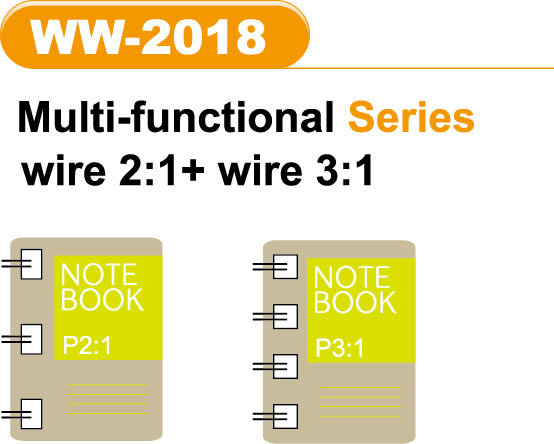
Selecting the right equipment requires a firm understanding of pitch ratios. Pitch refers to the number of punched holes per inch along the binding edge. This metric dictates which machine and which wire supplies you must purchase. You cannot mix and match pitches.
A 3:1 pitch means there are three holes per inch. This configuration is used for standard, thinner documents up to roughly 120 sheets. The holes are smaller and closer together, providing a tight, refined look. A 2:1 pitch means there are two holes per inch. This configuration uses larger holes spaced further apart and is designed for thicker documents ranging from 120 up to 250+ sheets. The thicker wire requires the wider spacing to function properly without tearing the paper.
For variable production environments, dual-pitch machines offer the best flexibility. These units feature two separate punching throats—one for 3:1 and one for 2:1—allowing operators to bind both thin reports and thick manuals using a single piece of equipment. This saves bench space and reduces overall equipment investment.
Evaluating a machine's punch capacity is critical for operational efficiency. Punch capacity refers to the maximum number of sheets the machine can cleanly punch in a single pull or cycle. Entry-level machines might punch 10 to 15 sheets per lift. Commercial-grade units can punch 30 to 40+ sheets per lift. Pushing a machine past its rated capacity will jam the dies and burn out the motor.
Calculating your required punch capacity depends on daily output targets. If you need to bind fifty 100-page books a day, a 10-sheet punch requires 500 separate punching cycles. A 30-sheet punch reduces that to roughly 170 cycles. Underpowered punching mechanisms create severe production bottlenecks, increasing labor time and causing operator fatigue. Always purchase a machine with a punch capacity that exceeds your average daily requirements to account for heavy cover stocks and clear acetate sheets, which require more punching force.
The choice between manual and electric operation heavily impacts workflow. Manual punch and manual close machines are ideal for low-volume, ad-hoc use. They require the operator to pull a lever to punch the holes and pull another lever to close the wire. While cost-effective, manual punching becomes physically exhausting during large runs, leading to inconsistent hole quality as the operator tires.
Electric punch and manual close systems are the standard for busy print shops and corporate mailrooms. The operator simply presses a foot pedal or a button to punch the paper, saving significant physical effort and keeping their hands free to handle the paper. Fully electric systems, which also feature electric wire closers, exist but are generally reserved for ultra-high-volume industrial environments. For most commercial applications, an electric punch combined with a manual closer provides the optimal balance of speed, control, and reliability.
Evaluating the long-term viability of a binding method requires analyzing consumable costs. Pre-cut double-loop wire elements generally carry a higher per-unit cost than bulk plastic coil. Wire is manufactured to exact lengths (e.g., 11 inches for letter size) and packaged carefully on rigid trays to prevent the loops from crushing or tangling during transit. This specialized packaging increases shipping and storage overhead. You cannot simply throw a box of wire elements onto a shelf; they require careful handling.
Plastic coil is often sold in bulk boxes. Because it is crush-resistant, it requires less protective packaging. Organizations can also purchase coil in long spools and cut it to custom lengths on-site, further reducing per-unit costs. However, the premium presentation achieved with metal wire often justifies the slightly higher consumable expense for client-facing deliverables. The perceived value of a wire-bound portfolio far exceeds the few extra cents spent on the metal element.
Labor efficiency directly impacts operational scalability. Assessing the time required to finish a single book reveals distinct differences between the two methods. Manually threading a spiral coil through 40+ holes takes time and dexterity. Even with an electric roller inserter, the operator must still manually cut and crimp both ends of the plastic coil using specialized pliers. If the crimp is sloppy, the coil spins out.
Wire binding offers faster per-book finishing for experienced operators. The operator simply drops the punched document onto the open wire element resting on a wire holder. They then move the document into the closing channel and pull the handle. There is no threading, cutting, or crimping involved. This single-action closing process significantly reduces the time-to-bind metric during high-volume production runs.
Heavy-duty binding equipment requires regular maintenance to ensure consistent performance. Identifying wear-and-tear components helps predict long-term reliability. On a Wire Binding Machine, the punch pins endure the most stress. Over time, punching through thick covers or clear acetate dulls the pins, leading to ragged holes and paper jams. Operators must periodically oil the punch dies to keep the action smooth.
The wire closer alignment blocks also require periodic calibration to ensure they squeeze the wire evenly across the entire spine. When evaluating machines, prioritize models featuring fully disengageable punch pins. This feature allows operators to pull specific pins out of the punching sequence. Disengageable pins are mandatory when binding custom paper sizes, as they prevent the machine from punching half-holes on the very edge of the sheet.
Punching errors ruin expensive printed documents instantly. The most common risk involves half-punched holes hanging off the top or bottom edge of the paper, often referred to in the shop as "half-moons." This occurs when the paper size does not perfectly align with the fixed spacing of the punch dies. It creates an ugly, unprofessional finish and weakens the binding, allowing the outer pages to tear away easily.
Mitigating this risk requires utilizing machines equipped with fully disengageable dies and adjustable edge guides. The operator must set the edge guide precisely and pull out any punch pins that fall on the outer edges of the paper. Always perform a test punch on a piece of scrap paper before processing the actual document to verify alignment and margin depth.
The closing process demands precision. Improper wire closing compromises the entire document. Over-squeezing the wire causes the metal loops to overlap. This prevents the pages from turning smoothly and ruins the circular shape of the spine. Under-squeezing leaves a gap between the wire ends, allowing pages to slip out of the book during normal use.
Mitigating this risk involves calibrating the machine's wire closer dial precisely to the wire diameter being used. Most commercial machines feature a micro-adjust dial for the closing channel. Operators must set the dial, perform a test run with a blank document or a scrap piece of wire, and inspect the seam. The two ends of the wire should meet perfectly, touching but not overlapping.
Purchasing incompatible supplies brings production to a halt. The primary risk involves buying wire pitches that do not match your specific machine. Attempting to use a 3:1 pitch wire in a document punched with a 2:1 pitch die is physically impossible. The holes will not line up with the wire loops, resulting in wasted supplies and missed deadlines.
Mitigating this risk requires standardizing procurement protocols. Clearly label all machinery with its specific pitch requirements right on the chassis. Train purchasing staff to verify pitch compatibility before ordering bulk supplies. Never mix 3:1 wire supplies with 4:1 spiral punch equipment, as the hole spacing and shapes are entirely incompatible.
Audit your average document thickness to determine whether a 3:1 or 2:1 pitch system best suits your daily production needs.
Calculate your monthly binding volume to establish the required punch capacity and decide between manual or electric operation.
Review specifications for commercial-grade machines, ensuring they feature fully disengageable pins for custom paper sizes.
Establish a standardized procurement list for consumables to prevent purchasing incompatible wire pitches or diameters.
A: Standard machines are pitch-specific and designed for one method. A 3:1 wire punch cannot accommodate a standard 4:1 spiral coil. The hole spacing and shapes differ entirely. However, specialized combination machines exist. These units feature multiple punching throats, allowing operators to punch for both wire and plastic coil on a single chassis.
A: Pitch refers to the hole spacing along the binding edge. A 3:1 pitch means three holes per inch. We use this for thinner books up to 120 sheets. A 2:1 pitch means two holes per inch. This configuration utilizes thicker metal wire to accommodate larger documents ranging from 120 up to 250 sheets.
A: Metal wire consumables generally cost slightly more per unit than bulk plastic coils. Wire requires specialized packaging on trays to prevent tangling. Additionally, the initial machine investment is often higher. A Wire Binding Machine requires a precision closing mechanism to squeeze the metal wire perfectly round, which adds to the equipment cost.
A: The maximum capacity is typically around 250 to 300 sheets of standard 20lb copy paper. Achieving this requires using the largest available 1-1/4 inch diameter wire on a 2:1 pitch configuration. Pushing beyond this limit causes the wire to warp and pages to fall out.
A: Spiral binding is highly preferred for mailers. The plastic coil possesses a physical memory and bounces back from crushing weight during transit. Metal wire is vulnerable to permanent deformation. If a wire-bound book is crushed under heavy boxes during shipping, the loops bend and ruin the document.
A: Unlike plastic comb binding, wire binding is permanent. To add or remove pages, you must cut the existing wire with snips and destroy it. After inserting the new pages, you must rebind the entire document using a brand-new wire element.