Phone: +86-178-1682-8319 | Email: sales@befitter.com.cn

Views: 0 Author: Site Editor Publish Time: 2026-09-08 Origin: Site
The physical binding of a printed product dictates its perceived value, durability, and functional lifespan in the hands of the end-user. Commercial printers, in-house facilities, and publishers constantly face a difficult balancing act. You must weigh aesthetic demands against production bottlenecks, equipment footprint, and material limitations. Choosing the wrong finishing method leads to frustrated readers, damaged products, or ruined margins.
This comparative analysis directly examines perfect binding versus spiral binding. We frame this discussion around product success criteria and the operational realities of your print shop. Integrating a Perfect Binding Machine or specialized spiral binding equipment into your production line requires a clear understanding of both capabilities. You need hardware that aligns with your client demands and volume requirements.
Aesthetic vs. Utility: Perfect binding delivers a premium, retail-ready finish with a printable spine, whereas spiral binding offers unmatched functional utility with 360-degree lay-flat capabilities.
Production Throughput: Spiral binding often yields higher sheets-per-minute for short runs due to simple coil insertion, while perfect binding requires precise glue curing and edge trimming, optimizing at higher volumes.
Equipment Investment: Purchasing a perfect binding machine requires evaluating capital expenditure against the ability to capture high-margin textbook, catalog, and softcover book contracts.
Durability Factors: Spiral binding withstands rugged, hands-free use in demanding environments (e.g., workbenches, kitchens), while perfect binding is highly robust for hand-held reading but requires gentler handling to prevent spine cracking if improper adhesives are used.
Table of Contents
Establishing a technical baseline requires looking at the physical construction of both methods. Each approach utilizes fundamentally different mechanical principles to secure the text block. Understanding these mechanics helps you anticipate production challenges and maintenance needs on the shop floor.
Perfect binding relies on thermal adhesives and mechanical pressure to secure pages inside a wrap-around cover. The process begins when the operator or automated feeder places the collated text block into a mechanical clamp. The clamp holds the pages tightly while transporting them over a milling station. High-speed rotating blades grind off the folded edges of the signatures. This milling process exposes the raw paper fibers. Roughing tools then create shallow notches along the spine.
Exposed fibers and notches allow the adhesive to penetrate deeply into the paper. Application rollers apply a precise layer of heated glue along the spine. Modern operations use either Ethylene Vinyl Acetate (EVA) or Polyurethane Reactive (PUR) adhesives. Side-gluing wheels apply a thinner strip of adhesive along the front and back edges of the text block near the spine.
The machine then registers a heavier-weight cover and presses it against the glued spine. A nipping station applies intense pressure to the sides and bottom of the spine. This creates a crisp, square edge. The book travels down a cooling conveyor to allow the adhesive to set. Finally, a three-knife trimmer cuts the top, bottom, and face edges. This final trim removes the excess cover material and provides a flush, professional finish.
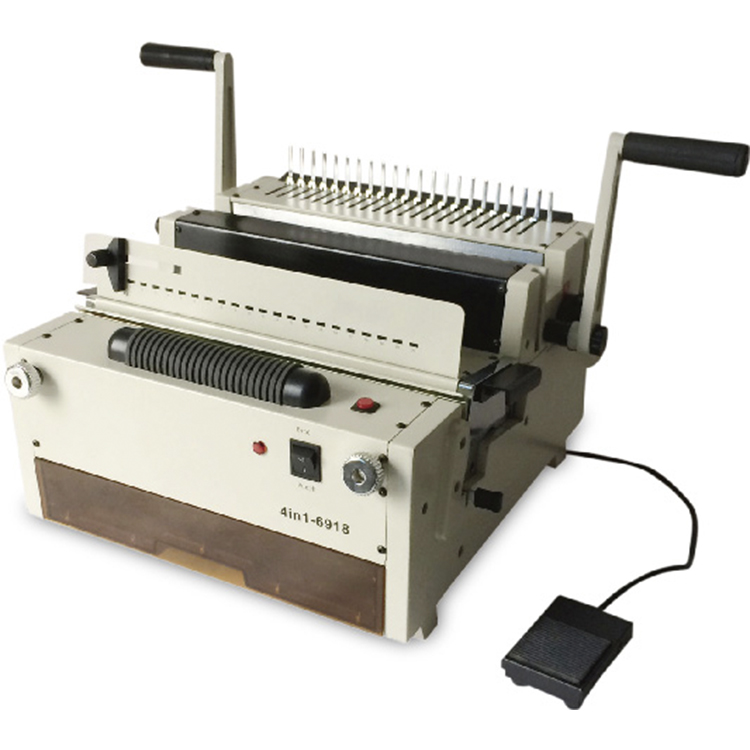
Spiral binding is a purely mechanical process. It uses no adhesives, heat, or curing time. The process starts by punching a series of closely spaced holes along the binding edge of the collated document. The punch dies can create round, oval, or square holes depending on the specific tooling installed.
The spacing of these holes is called the pitch. A 4:1 pitch means the machine punches four holes per inch. After punching, the operator aligns the front and back covers with the text block. A motorized roller mechanism threads a continuous plastic or metal coil through the entire length of the document.
Once the coil is fully inserted, special crimping pliers cut the excess coil and bend the ends inward. This crimping step prevents the coil from spinning out of the holes during use. Because there is no glue involved, the document is immediately ready for packing and shipping the moment the coil is crimped.
You must evaluate how each method performs against standard end-user requirements. Environmental contexts dictate which binding style will survive daily use. A manual used on a factory floor faces different stresses than a novel read in a living room.
A glued spine provides excellent structural integrity for hand-held materials. The wrap-around cover protects the interior pages from edge damage. However, perfect bound books require relatively gentle handling. Forcing a perfect bound book to lay completely flat can crack the spine. This is especially true if the printer used older EVA adhesives in a cold environment.
Spiral binding offers distinct advantages in rugged workspaces. The continuous plastic coil is highly flexible and crush-resistant. If a heavy object falls on a spiral-bound manual, the plastic coil compresses and bounces back. Spiral binding excels on desks, industrial workbenches, and kitchen counters.
The risk of page pull-out varies between the two methods. PUR perfect binding offers exceptional page pull strength. The chemical bond makes it nearly impossible to rip a single page out without tearing the paper itself. Spiral bound documents face a different risk. While the coil rarely breaks, aggressive page turning can tear the paper at the punch holes. Once a hole tears, that specific page can detach from the coil.
Every binding method has physical limitations regarding document thickness. A Perfect Binding Machine requires a minimum spine thickness to function correctly. The clamping and milling mechanisms usually need at least 0.125 inches of paper. This translates to roughly 20 to 24 pages of standard text-weight paper. If the book is too thin, the nipping station cannot form a square spine.
Spiral binding handles very thin documents easily. You can spiral bind a document with just two pages. However, spiral binding struggles at the upper extremes of thickness. Plastic coils max out around two inches in diameter.
When a spiral-bound book approaches maximum coil capacity, functionality degrades. The pages do not turn smoothly over the large radius of the coil. The text block shifts significantly when the book is closed, causing the edges to misalign. Perfect binding maintains a solid, uniform text block regardless of thickness, up to the maximum capacity of the machine's clamp.
Document security is a critical factor for legal, financial, and medical printing. Both perfect binding and spiral binding are considered permanent binding methods. This distinguishes them from comb binding, which allows users to easily open the plastic spine and swap pages.
Neither perfect nor spiral binding allows for the easy addition or removal of pages post-production. If a client finds an error in a perfect bound book, you cannot simply replace the flawed page. You must cut off the entire spine, reprint the corrected page, and rebind the entire book with a new cover.
Spiral binding is similarly inflexible for living documents. To replace a page, you must manually cut off the crimped ends, unthread the entire coil, insert the new page, and thread a brand new coil through the document. This permanence makes both methods highly secure for official reports but frustrating for documents that require frequent updates.
Perfect binding holds a massive advantage in retail environments. The flat, square spine allows you to print the book title, author name, and corporate branding directly on the edge. This bookshelf visibility is mandatory for bookstores, libraries, and premium retail displays.
The wrap-around cover provides a seamless canvas for graphic design. Artwork can flow uninterrupted from the back cover, across the spine, and onto the front cover. This creates a high-end, professional appearance.
Spiral binding presents a strictly utilitarian appearance. You cannot print on a plastic coil. When a spiral-bound book sits on a shelf, only the plastic loops are visible. You must design separate front and back covers, as the coil physically separates the two pieces of cardstock. This lack of shelf presence makes spiral binding unsuitable for most premium retail applications.
Shifting focus to the production floor reveals stark differences in hardware requirements. Executing these methods at scale requires specific infrastructure, floor space, and operator expertise. You must evaluate the hardware required to meet your production deadlines.
Setup times vary wildly between the two systems. Spiral binding utilizes modular punch-and-bind equipment. An operator can set the punch dies, adjust the edge guide, and begin punching within two minutes. Coil insertion is fast for short runs. However, manual coil threading becomes a severe bottleneck when producing hundreds of books.
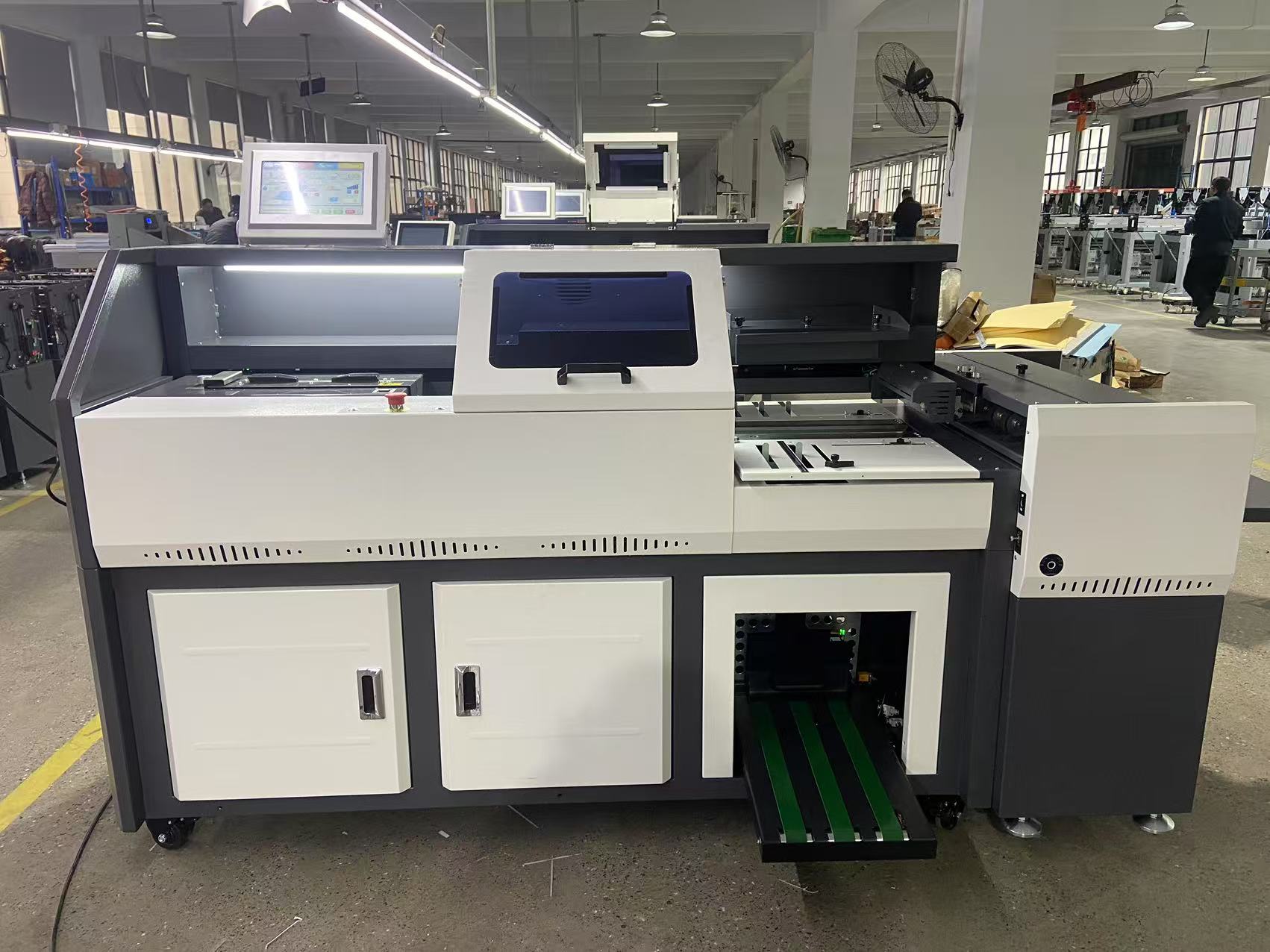
A commercial Perfect Binding Machine requires automated clamping, gluing, and nipping cycles. Setting up a perfect binder takes longer. The operator must adjust the milling depth, set the side-glue application width, and calibrate the cover registration guides. Once calibrated, automated perfect binders process hundreds of books per hour.
Glue warm-up times heavily impact on-demand fulfillment. EVA glue requires 30 to 45 minutes to reach operating temperature. PUR glue systems take even longer and require strict temperature monitoring. If a client requests a rush order of five books, firing up a perfect binder is highly inefficient. Spiral binding equipment is ready to operate the second you turn on the power switch.
Commercial-grade perfect binders represent a significant capital investment. These are heavy industrial machines built with precision milling motors, heated glue tanks, and pneumatic clamping systems. They require dedicated floor space. You must also account for the footprint of the necessary three-knife trimmer.
Ventilation is a mandatory consideration. Melting EVA and PUR adhesives produce fumes. You must install overhead exhaust hoods to maintain a safe working environment. Many industrial perfect binders also require three-phase electrical power and compressed air lines.
Spiral binding equipment requires a fraction of the investment. Modular punches and coil inserters fit on standard workbenches. They run on standard 110V or 220V single-phase power. They produce no fumes and require no special ventilation. You can easily roll a spiral binding station into a corner when not in use.
Operating a perfect binder requires technical expertise. Operators must understand paper grain direction. They must know how to adjust milling depth based on paper thickness and coating. They must monitor glue application thickness and adjust nipping pressure to ensure a perfectly square spine.
Training an operator to run a perfect binder independently takes weeks. Mistakes result in ruined covers, crooked spines, or pages falling out due to poor glue penetration. The operator must also perform daily maintenance on the glue pots and milling blades.
Spiral binding presents a very low barrier to entry. You can train a new employee to operate a punch and coil inserter in less than an hour. The primary skills involve keeping the pages jogged flat before punching and learning the wrist motion for the crimping pliers. Quality control is visual and immediate.
Justifying the equipment investment requires a clear framework. You must analyze consumable costs, market opportunities, and ongoing maintenance demands. A perfect binder transforms your production capabilities, but it must generate sufficient volume to offset the initial outlay.
Consumable costs shift dramatically as volume increases. Perfect binding utilizes bulk adhesives and single-sheet wrap-around covers. EVA and PUR glue cost pennies per book. Once the machine is running, the material cost per unit drops significantly. You buy glue in bulk pellets or slugs, driving down the cost per ounce.
Spiral binding requires purchasing individual plastic coils and separate front and back cover stocks. Often, shops use clear acetate front covers and heavy poly-vinyl back covers. These materials are relatively expensive. The cost of a plastic coil and two poly covers far exceeds the cost of a few grams of glue and a single sheet of cardstock.
Economies of scale favor perfect binding. When producing 5,000 catalogs, the automated speed and low consumable costs of perfect binding yield massive profit margins. Spiral binding 5,000 catalogs would incur high material costs and crippling labor expenses due to the manual threading process. The labor required to manually thread 5,000 coils destroys any profit margin on the job.
Owning a perfect binder unlocks specific, high-margin markets. Self-publishing authors demand retail-ready paperbacks. Corporations require sleek annual reports. Manufacturers need high-end product catalogs. You cannot service these clients with spiral binding.
Outsourcing perfect binding carries a high opportunity cost. When you send printed text blocks to a third-party bindery, you surrender a portion of your profit margin. You also lose control over the production schedule. Transit times add days to the project timeline.
Bringing perfect binding in-house allows you to capture the full margin of the job. You control the quality from the printing press to the final trim. You can offer faster turnaround times, making your shop more competitive for premium commercial contracts.
Maintenance realities differ sharply between the two systems. Perfect binders require rigorous daily and weekly maintenance. Operators must execute specific procedures to keep the machine operational:
Scrape excess glue from the application rollers at the end of every shift while the adhesive is still warm.
Drain and clean the glue pots to prevent charred adhesive buildup, which can block application nozzles.
Inspect and replace dull milling blades to ensure proper paper fiber exposure for maximum glue penetration.
Lubricate moving clamps, guide rails, and pneumatic cylinders weekly to maintain precise cover registration.
Vacuum paper dust from the milling station to prevent fire hazards and mechanical jamming.
You must carefully manage adhesive shelf life. PUR glue reacts with moisture in the air. If left exposed, it will cure inside the machine, causing catastrophic damage to the application system.
Spiral binders require minimal maintenance. The primary task is occasionally sharpening or replacing the punch pins when you notice jagged edges on the punched holes. You must manage coil inventory, ensuring you stock various diameters and colors to meet client requests. Coils do not expire, and the machines do not require daily cleaning. You simply empty the paper waste tray beneath the punch dies.
Selecting the right equipment depends entirely on your operational profile. You must match your hardware to the specific products your clients demand. Use the following matrix to guide your final selection.
Feature | Spiral Binding | Perfect Binding |
|---|---|---|
Lay-Flat Ability | Excellent (360-degree rotation) | Poor (Spine resists flat opening) |
Spine Printing | Impossible | Standard |
Setup Time | Fast (Under 5 minutes) | Slow (Requires glue warm-up) |
Cost at High Volume | High (Labor and materials) | Low (Automated, cheap glue) |
Minimum Pages | 2 pages | ~24 pages (0.125" spine) |
Spiral binding is the undisputed champion of utility. Choose this method for documents that require hands-free reading and desk-flat utility. Ideal use cases include:
Automotive and machinery repair manuals.
Kitchen cookbooks and recipe guides.
Educational workbooks and study materials.
Corporate presentations requiring fold-back pages.
We recommend spiral binding for low-to-medium volume print shops. If your clients prioritize rugged end-use and versatility over retail aesthetics, modular punch-and-bind equipment provides the best return on investment. The low upfront equipment cost minimizes your financial risk.
Perfect binding is mandatory for products competing on a retail shelf. Invest in this technology when your clients demand professional aesthetics and brand-heavy presentation. Ideal use cases include:
Self-published novels and paperbacks.
High-end lifestyle magazines and periodicals.
Thick product catalogs and directories.
Brand-heavy corporate annual reports.
We recommend a Perfect Binding Machine for operations securing steady, high-volume contracts. If you regularly outsource glued books, bringing the process in-house will dramatically improve your margins. The shelf appeal and gentle-handling aesthetics justify the capital expenditure.
Many successful commercial print shops refuse to choose just one method. Housing both systems allows you to capture a wider spectrum of commercial and consumer print fulfillment contracts. You can bid on the spiral-bound training manuals and the perfect-bound annual reports for the same corporate client.
A hybrid approach maximizes your facility's versatility. You can route short-run, rush jobs to the spiral binding station while the perfect binder warms up for a 5,000-unit catalog run. This flexibility ensures you never have to turn away a profitable job due to hardware limitations.
Audit your current outsourcing volume for glued books to determine if an in-house machine aligns with your production capacity.
Evaluate your available floor space, electrical capacity, and ventilation options before installing industrial finishing equipment.
Review the technical specifications for entry-level or industrial perfect binders to match clamp capacity with your average book thickness.
Survey your top clients to identify upcoming projects requiring a different binding method than you currently offer.
A: A perfect binder requires a minimum spine thickness to allow the clamp and milling station to function. This is usually around 0.125 inches. Depending on paper weight, this translates to roughly 20 to 24 pages. Thinner documents cannot form the square spine required for the glue to adhere properly to the cover.
A: Durability depends entirely on the use case. Spiral binding is better for heavy, flat desk use and rugged environments because the plastic coil resists crushing. PUR perfect binding offers superior page-pull strength for hand-held reading, but the spine can crack if forced to lay flat repeatedly.
A: No. Unlike comb binding, both spiral and perfect binding are permanent methods. Adding or removing pages from a perfect bound book requires cutting off the spine and completely rebinding it. For spiral binding, you must cut the crimped ends, unthread the coil, insert the page, and rethread a new coil.
A: Most standard machines are built specifically for one type of adhesive due to vastly different heating, application, and cleaning requirements. PUR requires sealed tanks to prevent moisture curing. While some high-end hybrid machines exist, switching between the two adhesives is generally complex and time-consuming.
A: Spiral binding requires no heat. The equipment is ready to punch and bind immediately upon powering on. Perfect binding requires 30 to 45 minutes for the glue to reach operating temperature. For a run of ten books, the mechanical simplicity of coil insertion easily beats the warm-up and calibration time of a perfect binder.
A: Standard perfect bound books struggle to lay flat because the glued spine resists opening. Forcing them flat can damage the binding. Specialized methods like Ota-bind or using highly flexible PUR adhesives offer partial workarounds, allowing the book to open wider without breaking the spine.
A: Routine maintenance involves scraping excess adhesive from glue pots and application rollers. Operators must regularly lubricate moving clamps and pneumatic cylinders. Milling blades dull over time and require replacement to ensure proper paper fiber exposure. You must also ensure exhaust hoods and ventilation systems remain clean and functional.