Phone: +86-178-1682-8319 | Email: sales@befitter.com.cn

Views: 0 Author: Site Editor Publish Time: 2026-09-08 Origin: Site
Presenting professional, durable documents shapes client perception immediately. Selecting the wrong equipment creates workflow bottlenecks. It wastes consumables and yields documents that fail to meet industry durability standards. Choosing the right setup requires looking past the initial hardware. You must evaluate punch capacity, consumable economics, document security, and long-term reliability. A high-quality Binding Machine transforms loose sheets into structured, authoritative assets. Many offices struggle with outsourced printing delays. Bringing this capability in-house gives you control over production timelines and quality. However, buying a unit without understanding pitch ratios or punch limits leads to broken dies and frustrated staff. We will walk through the mechanical differences between wire, coil, comb, and thermal systems. You will learn how to match the hardware to your specific document volume and security requirements.
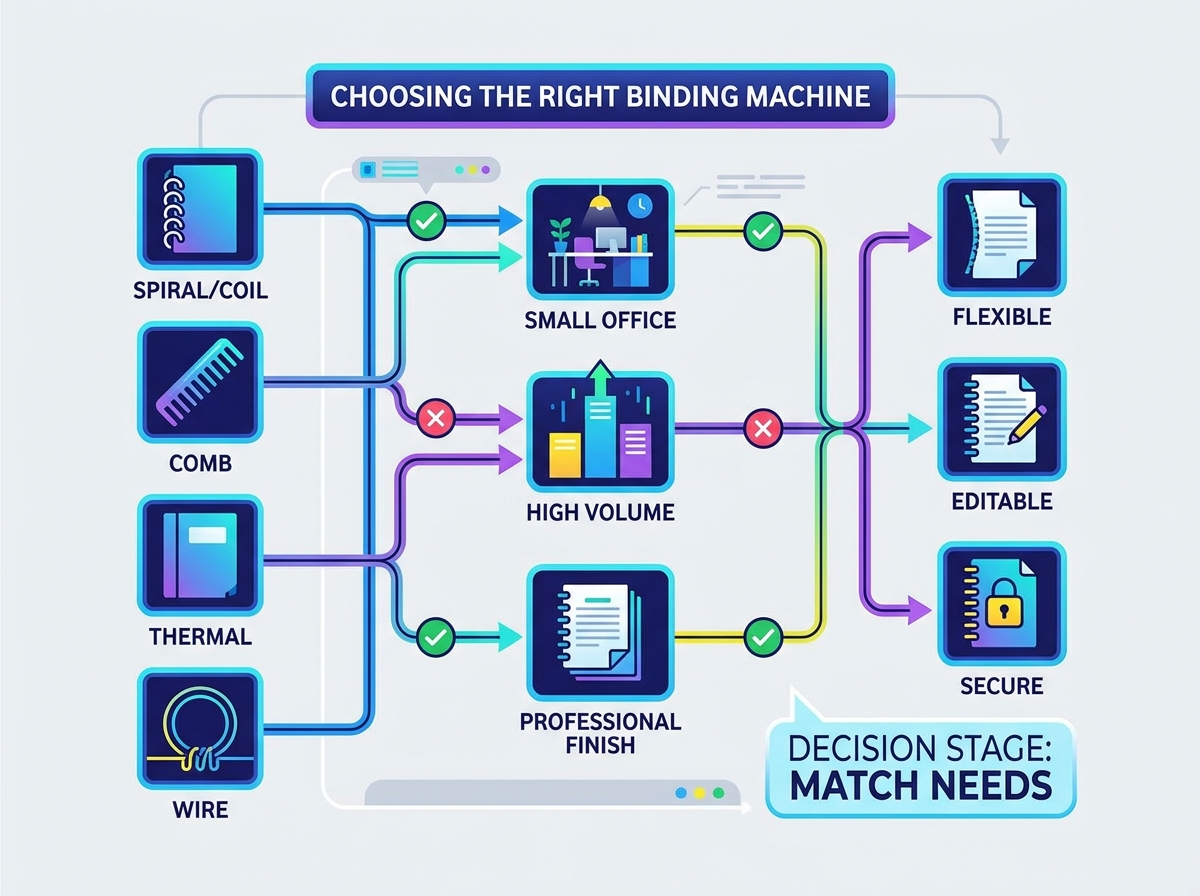
Match Method to Industry: Wire and Thermal binding machines offer the tamper-resistant, premium finish required by legal and accounting firms, while Comb, Coil, and Discbound machines provide flexibility for internal reports, handbooks, and educational materials.
Manual vs. Electric Trade-offs: Electric punching mechanisms reduce operator fatigue and increase throughput for high-volume environments, but require a higher initial capital expenditure and dedicated maintenance.
Consumable Economics: Long-term operational expenses are dictated more by the ongoing cost of spines, covers, and proprietary supplies than the initial hardware investment.
Feature Necessity: Disengageable pins and adjustable margin depth are non-negotiable features for businesses binding non-standard paper sizes or seeking professional edge alignment.
Table of Contents
Understanding the difference between binding capacity and punching capacity prevents equipment failure. Binding capacity dictates the maximum number of pages a specific spine can hold. Punching capacity determines how many sheets the machine cuts in a single pull. Manufacturers often advertise a 20-sheet punching capacity. In field conditions, you should punch 15 sheets of standard 20lb paper. This buffer prevents motor strain and extends die life.
Calculate your weekly document output accurately. If you assemble 50 books a month, a manual punch mechanism suffices. If you process 500 books a week, an electric punch becomes mandatory. Consistently maxing out a manual lever causes severe operator fatigue. It also slows down production timelines significantly. You must account for the operator's physical limits when planning large production runs.
Monthly Volume | Recommended Punch Type | Operator Fatigue Level | Ideal Environment |
|---|---|---|---|
1 - 50 Books | Manual Lever | Low | Small Office / Occasional Use |
51 - 250 Books | Electric Push-Button | Medium | Mid-Sized Department |
251 - 1000+ Books | Heavy-Duty Electric Foot Pedal | Low (Hands-Free) | Print Shop / Mailroom |
Certain sectors demand strict tamper-evident documentation. Accounting firms, legal practices, and healthcare providers cannot risk unauthorized page swapping. Highly editable formats fail these compliance checks. Permanent formats offer strict document security. Once assembled, altering these secure documents leaves obvious physical damage.
Evaluate your internal compliance rules before purchasing hardware. If a client contract requires sealed financial audits, you must use a permanent method. If you only produce internal training drafts, an editable format saves money. Match the security level directly to the document's final destination. A chain of custody requires physical evidence if a document is breached.
Consider how the end user physically handles the document. Training manuals, technical workbooks, and reference guides require 360-degree lay-flat capabilities. Readers need to fold the book back on itself to save desk space. Formats utilizing continuous loops excel in these environments. Mechanics and engineers rely on manuals that stay open hands-free.
Proposals and executive summaries often sit on office bookshelves. They require a flat, readable spine for easy identification. Heat-sealed formats deliver this traditional paperback aesthetic. A document that refuses to stay open frustrates the reader. A document that cannot stack neatly clutters a filing cabinet. Choose the physical function that matches the reader's environment.
This system uses cylindrical plastic spines. The spines feature individual rings that open and close through a manual spreader mechanism. You place the plastic spine on the comb spreader. The solid spine rests against the back plate. You pull the lever forward to open the rings. You load the punched paper face down. This ensures the seam sits at the back of the book when closed. You push the lever back to close the rings.
Consumables remain highly cost-effective. You can easily add or remove pages long after the initial assembly. The wide plastic spines accept custom screen printing for corporate branding. Books lay relatively flat on a desk during use. You can reopen the spine hundreds of times without degrading the plastic mechanism.
The plastic aesthetic carries a lower perceived professional value. Documents cannot fold back a full 360 degrees. The plastic teeth become brittle and break under heavy daily use. This format suits internal corporate reports, thick employee handbooks, school directories, and budget-conscious environments.
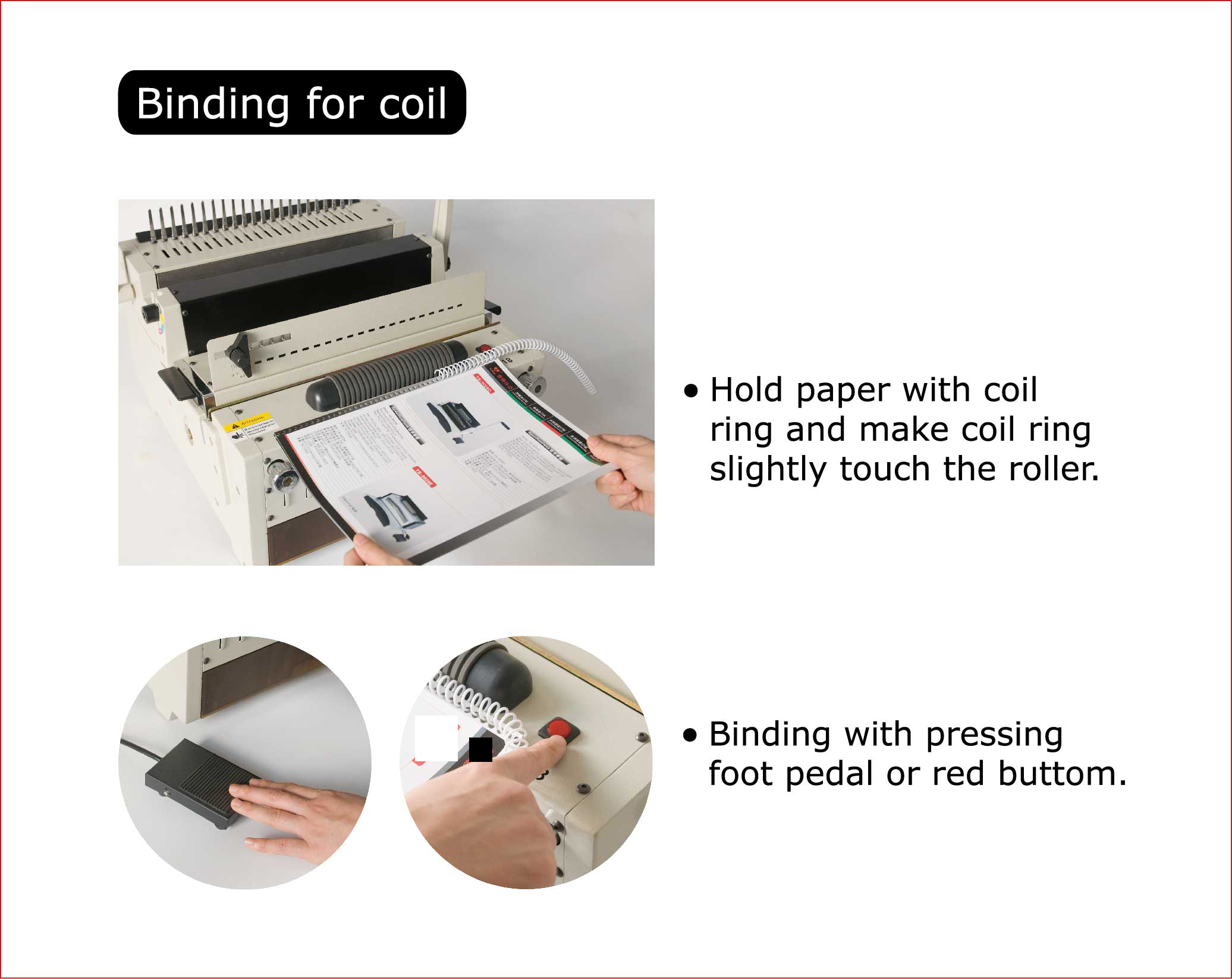
The machine punches closely spaced round or oval holes along the paper edge. A continuous PVC plastic coil threads through these holes. Manual threading takes too long for books over 50 pages. You need an electric roller. You press the coil against the spinning rubber roller, and it shoots through the holes.
Spines are crush-resistant and extremely durable. They bounce back into shape if stepped on or mailed in tight envelopes. Documents achieve a true 360-degree lay-flat reading experience. The system accommodates very high page counts easily. The plastic coils come in dozens of colors to match corporate branding.
You must crimp the ends. You hold the crimping pliers with the red dot facing up. You squeeze the handles to cut and bend the plastic wire simultaneously. If you miss this step, the coil spins out of the book during use. This format is ideal for restaurant menus, training manuals, wall calendars, and high-handling reference documents.
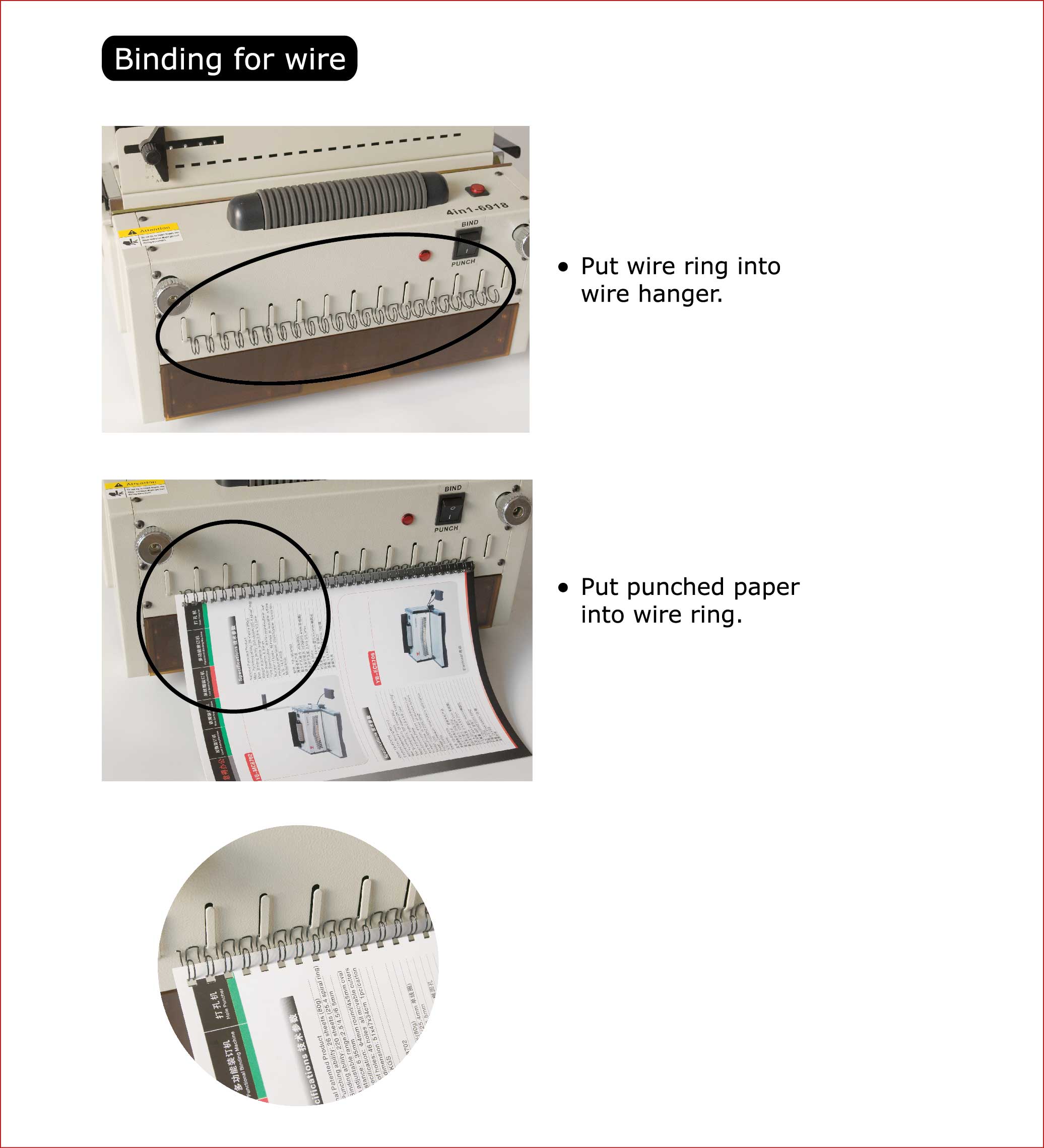
This method uses a C-shaped metal wire. The operator places the punched pages onto the open wire loops. A mechanical wire closer then squeezes the wire shut into a perfect circle. You place the open wire into the magnetic channel. You pull the closing lever. The machine squeezes the C-shape into an O-shape.
It delivers a high-end, executive aesthetic. Pages turn smoothly and lay perfectly flat. The format is tamper-resistant. Reopening the book destroys the metal wire entirely. It conveys authority and precision. Architects and real estate agents prefer this method for high-stakes presentations.
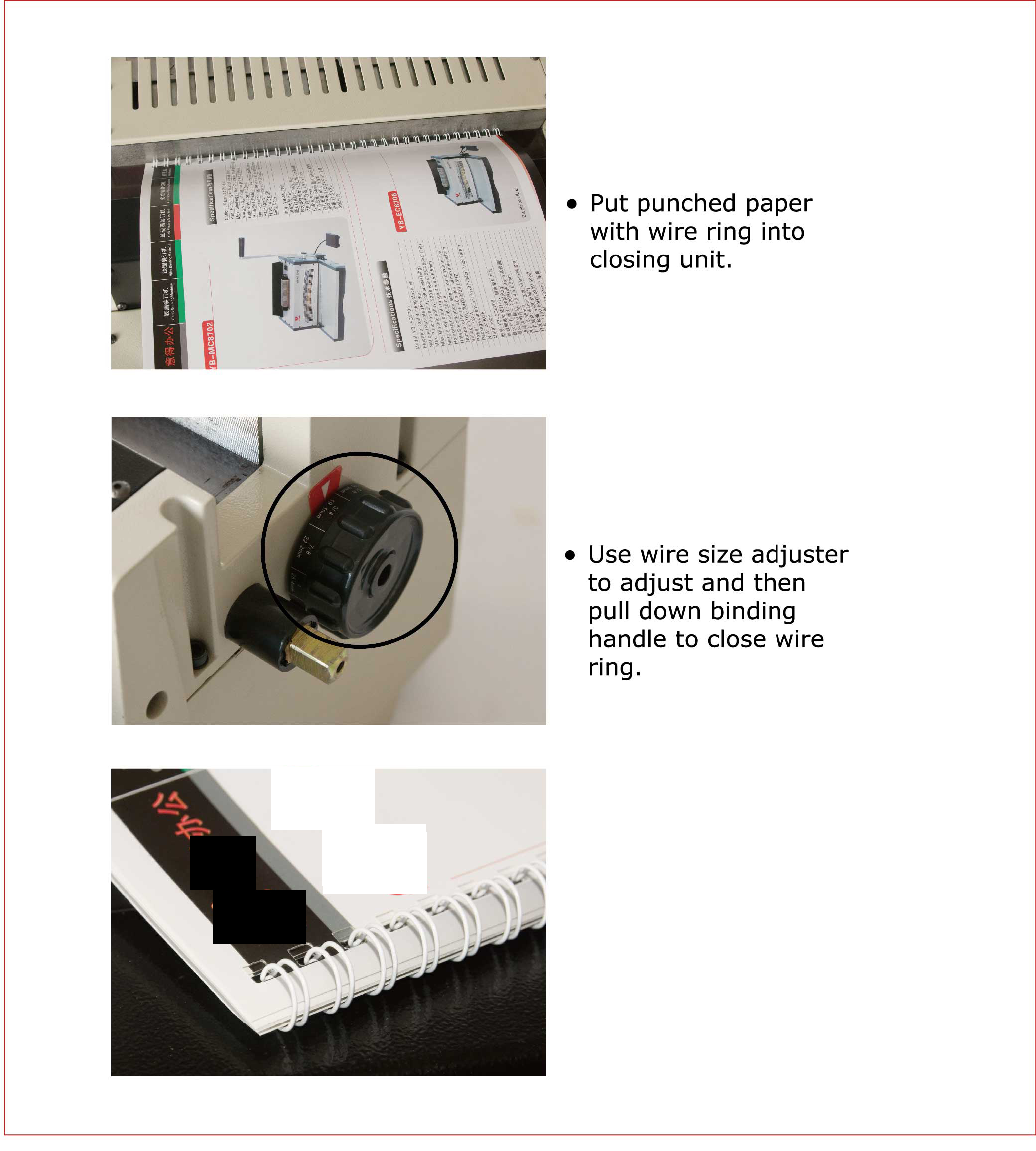
Wire closers require exact calibration. You set the dial to match the wire diameter, like 5/16 inch. If you under-close it, pages fall out. If you over-close it, the wire overlaps and binds the pages. You must perform test closures on scrap paper before running a live job. This method dominates client-facing proposals, real estate portfolios, and professional agency pitches.
This system requires absolutely no punching. It uses heat to melt a specialized adhesive strip located inside a pre-made cover. You place the loose pages into the pre-glued cover. You tap the spine on a hard desk to ensure all pages touch the bottom. You drop the book into the heating bay. The machine beeps when the cycle finishes.
Operation is extremely fast. You can process multiple documents simultaneously in a wide heating bay. The final product looks like a polished, perfect-bound paperback book. It requires very little physical effort from the operator. You do not have to empty chad trays or lubricate punch dies.
You must move the book to a cooling rack immediately. The glue needs three minutes to harden. If you open the book while the glue is hot, the pages detach permanently. Forcing the document open too wide cracks the adhesive spine. It suits accounting firms, legal briefs, and executive summaries demanding a flat, secure spine.
The machine punches 11 small holes along the 11-inch edge. You insert the plastic pin strip through the front. You place the receiving strip on the back. The machine clamps the book tightly. A hot knife slices off the excess pin length. It then melts the remaining plastic into flat rivets. This creates a permanent, tamper-proof seal.
This is the most secure method available. It is entirely tamper-proof. Storage is highly compact due to the flat, rigid spine. It secures massive documents up to three inches thick without losing integrity. Law firms rely on this method to prevent evidence tampering during transit.
The assembly process is slow. Both the hardware and the consumables carry a premium price. Editing the document is impossible without a specialized debinding tool. You must cut the rivets off manually to remove a page. It remains the standard for legal transcripts, financial audits, and sensitive government documents.
The punch dies cut a mushroom shape. The narrow stem connects to the paper edge. The wide cap grips the disc. You press the paper down onto the discs. The paper flexes around the disc lip and snaps into place. You can pull the page up and out without tearing the paper.
It offers ultimate modularity. You can remove, rearrange, and reinsert pages instantly. You do not need to open a mechanism or destroy the spine. The aesthetic is highly customizable with different disc colors and materials. Users can build their own notebooks on the fly.
This requires heavy-duty paper stock. Standard 20lb copy paper tears easily in a discbound system. You should use 28lb or 32lb paper for durability. The discs create bulk for filing. The format is entirely unsuitable for secure or tamper-proof requirements. It works best for agile project planners, dynamic training handbooks, and customizable internal notebooks.
Binding Method | Security Level | 360-Degree Lay-Flat | Editability | Ideal Use Case |
|---|---|---|---|---|
Comb | Low | No | High | Internal Handbooks |
Coil | Medium | Yes | Low | Training Manuals |
Wire | High | Yes | None | Client Proposals |
Thermal | High | No | None | Financial Audits |
VeloBind | Maximum | No | None | Legal Transcripts |
Discbound | None | Yes | Maximum | Agile Planners |
Entry-level machines feature plastic chassis and lightweight internal components. They suit occasional office use where speed is not a priority. Commercial manufacturers build heavy-duty metal machines. They use hardened steel punch dies and robust motors. Print shops and high-volume offices require this commercial-grade construction. It prevents frequent breakdowns and costly downtime during critical production runs.
A heavy metal chassis also prevents the unit from sliding across the table during operation. When you pull a manual lever on a cheap plastic unit, the whole machine tips forward. Commercial units stay planted. This stability improves punch accuracy and reduces operator frustration. You do not have to bolt a heavy metal machine to the desk.
Manual levers work well for low volumes. They offer reliability and lower upfront costs. High-volume environments demand electric punching. A foot pedal activates the punch mechanism instantly. This reduces operator fatigue significantly over a long shift. Operators can maintain a consistent rhythm without shoulder strain.
Electric punching frees both hands to handle paper. The operator can align the next stack while the machine punches the current stack. The labor cost savings in a busy production room quickly justify the electric upgrade. Time saved on assembly translates directly into higher daily output. You can process twice as many books per hour with a foot pedal.
Pitch refers to the number of holes per inch along the paper edge. A 4:1 pitch means four holes per inch. This is the global standard for plastic coil. Wire systems use a 3:1 pitch for thinner books and a 2:1 pitch for thicker books. You must measure the pitch accurately before ordering supplies.
Selecting a machine locks you into its specific pitch. You must buy compatible supplies for the entire lifespan of the equipment. You cannot thread a 4:1 coil through a 3:1 punched hole. Understand your required pitch before purchasing hardware to ensure supply availability. Mismatched supplies will jam the machine and ruin the document.
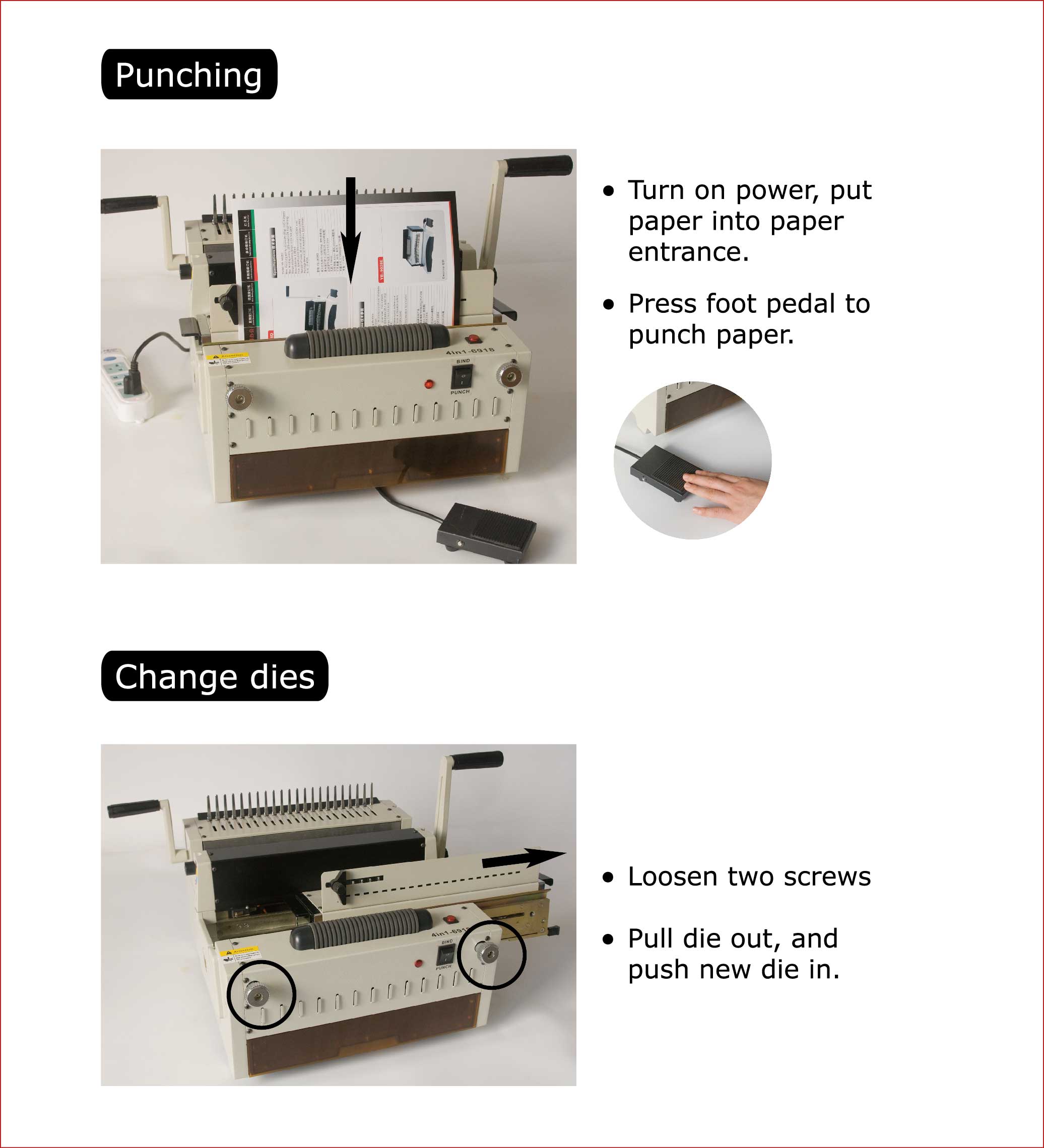
Disengageable pins allow you to pull specific punch dies out of operation. This prevents half-punched holes on the very edges of custom-sized paper. If you bind half-letter or A5 documents, disengageable pins are mandatory for a clean edge. You simply pull the metal pin straight up to disengage it from the punch block.
Adjustable margin depth controls how far the holes sit from the paper edge. Thicker books require a deeper margin. This prevents pages from tearing out when users turn them. Thin books need a shallow margin so the pages turn freely without binding against the spine. These two features separate professional equipment from basic office tools. You adjust the margin using a sliding dial on the side of the machine.
Look beyond the sticker price of the hardware. Comb systems require a low initial investment and use highly affordable supplies. Thermal systems carry a moderate hardware price but demand the highest consumable costs. Calculate your estimated annual volume carefully before committing to a format.
Multiply your annual volume by the cost per cover or spine. The ongoing supply expenses quickly eclipse the initial hardware investment. Spending more on a robust coil punch upfront saves money if bulk coil supplies cost less than proprietary thermal covers over five years. You must forecast your supply usage accurately.
Avoid heavily discounted hardware that requires proprietary supplies. Single-source covers or unique spine formats eliminate your ability to shop around. If the manufacturer raises prices or discontinues the line, your hardware becomes useless. You become trapped in their specific supply ecosystem.
Recommend open-standard formats. Standard 4:1 coil, 3:1 wire, or 19-ring comb supplies are available from dozens of global manufacturers. This open market keeps your ongoing operational costs competitive. It guarantees you will always find supplies, regardless of supply chain disruptions. You can switch vendors anytime to secure better bulk rates.
Every system has a learning curve. Wire closers require exact micro-adjustments. If set incorrectly, they crush the wire into an oval. Manual coil crimping requires specific hand placement and practice. If cut wrong, the coil unwinds itself. You cannot expect a new employee to operate these machines perfectly on the first try.
Treat commercial binding equipment with respect. Designate and train specific operators. Do not treat these units as general-use breakroom equipment. Proper training eliminates workflow bottlenecks and reduces wasted supplies. A trained operator processes documents three times faster than an untrained employee. Create a simple one-page visual guide and tape it above the machine.
Punch dies dull over time. Motor burnout occurs when users routinely exceed punch capacities. Implement strict usage guidelines. Punching clear PVC covers dulls blades extremely quickly. Always punch plastic covers one at a time, regardless of the machine's paper capacity. Two plastic covers will jam the dies permanently.
Empty the chip tray regularly. An overflowing tray causes paper jams and damages the internal punching mechanism. The paper chips back up into the dies, bending the steel pins. Regular oiling with specialized lubrication sheets keeps the dies cutting cleanly through thick cardstock.
Unplug the machine before attempting to clear any paper jams.
Remove the chip tray and empty all paper waste into a recycling bin.
Use a flathead screwdriver to gently reverse the punch mechanism if the dies are stuck in the down position.
Run a wax lubrication sheet through the punch twice to coat the steel pins.
Punch three sheets of scrap paper to remove any excess wax before resuming normal operation.
The best system directly aligns with your document volume, security needs, and aesthetic standards. Choose comb or discbound for low-cost, editable internal documents. Select coil for durable, highly handled manuals. Opt for wire or thermal when presenting premium, client-facing proposals. Deploy VeloBind for strict legal compliance.
Audit your current monthly document output to establish a realistic baseline volume.
Determine your maximum required page capacity based on your thickest standard document.
Request supply cost estimates from multiple vendors to forecast long-term operational expenses.
Test physical samples of different binding methods to evaluate lay-flat capabilities and durability.
Assign dedicated staff members to manage, operate, and maintain the new equipment.
A: Wire systems use a C-shaped metal twin-loop that is squeezed closed. It offers a premium, executive look but is easily crushed if mishandled. Coil systems use a continuous PVC plastic spiral threaded through holes. Coil is highly durable, crush-resistant, and ideal for heavy-handling environments.
A: Thermal and wire formats are ideal for accounting firms. Both provide tamper-evident security. Thermal offers a flat, bookshelf-friendly spine resembling a paperback book. Wire provides a professional, lay-flat finish. Both prevent unauthorized page swapping in sensitive financial audits.
A: Pitch indicates the number of punched holes per inch. A 4:1 pitch means four holes per inch, which is standard for coil. A 3:1 pitch means three holes per inch, common for thinner wire-bound books. You must buy supplies that exactly match your machine's pitch.
A: Yes. Plastic comb spines are highly editable. You can use the machine's spreader mechanism to open the rings, remove the pages, and reuse the spine for a different document. This makes comb a very cost-effective choice for internal drafts.
A: Pages fall out if the adhesive does not fully melt or if the document is not left on the cooling rack long enough. The glue must set completely before opening the book. Also, exceeding the cover's maximum sheet capacity prevents the inner pages from touching the glue.
A: While a manufacturer may advertise a 20-sheet maximum, you should punch 15 sheets of standard 20lb paper. Consistently maxing out the punch capacity strains the motor and dulls the dies faster. Always punch clear plastic covers one at a time.