Phone: +86-178-1682-8319 | Email: sales@befitter.com.cn

Views: 0 Author: Site Editor Publish Time: 2026-09-08 Origin: Site
The commercial print and in-house publishing sectors demand rapid, professional-grade softcover book production. Reliable binding infrastructure serves as a core operational asset for these facilities. Selecting the wrong binding equipment results in spine failure, excessive adhesive waste, and severe production bottlenecks. Poor equipment choices also lead to an inability to handle diverse paper stocks, particularly coated or heavy-weight sheets. Understanding the precise mechanical workflow of a Perfect Binding Machine is essential. Facility managers must weigh the operational trade-offs between different adhesives and varying automation levels. This knowledge provides the foundation for evaluating equipment that aligns with specific production volumes and rigorous quality standards. We will break down the step-by-step mechanical process, compare core adhesive technologies, and match machine specifications to actual production outcomes. You will learn how to optimize your bindery workflow and eliminate common finishing errors.
Mechanical Precision: A perfect binding machine relies on a synchronized process of milling, gluing, and nipping to transform loose pages into a durable, retail-quality book.
Adhesive Selection Dictates Capability: The choice between EVA (Ethylene Vinyl Acetate) and PUR (Polyurethane Reactive) adhesives fundamentally alters machine requirements, paper compatibility, and final product durability.
Automation Drives Throughput: Modern automatic book binding machines utilize touchscreen keypad controls and memory recall to reduce changeover times between varying book thicknesses (up to 55mm and beyond).
A perfect binding machine operates as specialized print finishing equipment. It collates, mills, and glues a text block directly to a wrap-around cover. This process produces paperback books, product catalogs, corporate directories, and glossy magazines. The equipment transforms loose printed sheets or folded signatures into a unified, professional publication with a square, printable spine.
Print shops leverage this equipment for more than just books. By intentionally bypassing the cover-feeding and nipping stages, operators use the machine for padding. This alternative application allows facilities to create tear-off notepads, branded writing pads, and carbonless forms. Padding expands the operational utility of the equipment, providing an additional revenue stream for print service providers without requiring separate padding presses.
Perfect binding differs fundamentally from mechanical binding techniques. Comb binding and spiral binding rely on physical punching and threading. They use plastic or metal coils to hold pages together. Perfect binding uses a strong, flexible adhesive to bond pages along the spine. This eliminates the need for punched holes and allows for a wraparound cover. Saddle stitching uses wire staples driven through the fold of a booklet. While efficient for thin booklets, saddle stitching fails when page counts increase. Perfect binding accommodates much higher page counts and provides the flat spine necessary for bookshelf display and spine printing.
Historically, perfect binding served items with a short useful life. Telephone directories and disposable catalogs were primary applications. Modern equipment has evolved significantly. Today, a high-quality Perfect Binding Machine equipped with advanced adhesives produces highly durable, archival-quality books. These finished products withstand repeated opening, heavy handling, and long-term storage without page pull-out or spine cracking.
Binding Method | Mechanism | Best Application | Page Count Limit |
|---|---|---|---|
Perfect Binding | Milled spine with hot-melt or PUR adhesive | Paperbacks, catalogs, thick magazines | High (Up to 55mm thick) |
Saddle Stitching | Wire staples through the center fold | Zines, programs, thin booklets | Low (Typically under 64 pages) |
Spiral/Coil Binding | Punched holes with threaded plastic/metal coil | Manuals, notebooks, reference guides | Medium (Depends on coil diameter) |
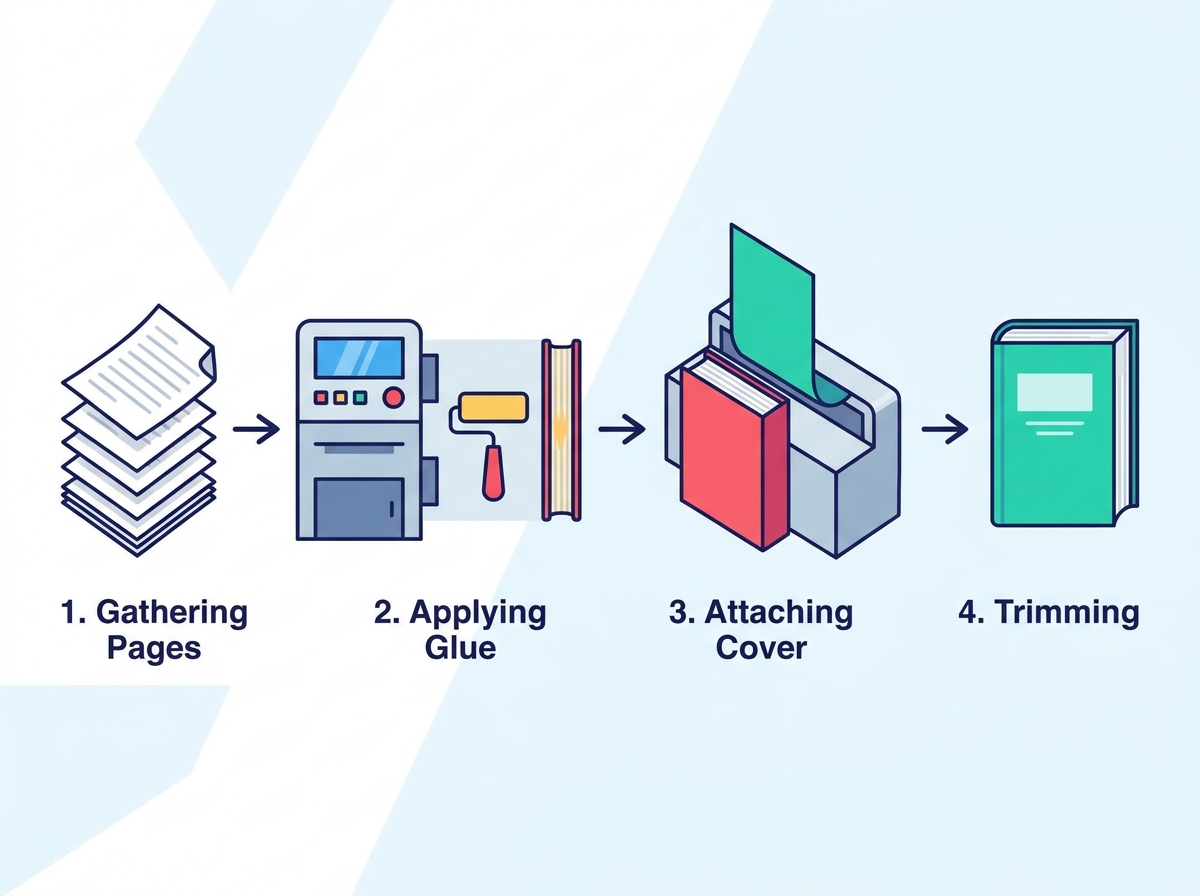
The binding process begins with securing the text block. An automated clamping mechanism grips the collated pages tightly. This clamp transports the text block over the preparation stations. The milling station features high-speed rotating blades. These blades cut off the folded edges of signatures. For loose sheets, the milling process roughens the spine edge to expose fresh paper fibers. Exposing these fibers allows for maximum adhesive penetration.
Following the milling blades, notching tools create shallow channels across the spine. These notches allow the adhesive to penetrate deeply into the text block, anchoring the inner pages securely. Operators must calibrate the milling depth based on the paper stock. Heavy coated stocks require aggressive milling to break through the clay coating. Uncoated offset paper requires less aggressive preparation. If the milling depth is too shallow, the inner pages will fall out. If it is too deep, the machine generates excessive paper dust and weakens the spine structure. Paper grain direction heavily influences the milling process. Running paper with the grain parallel to the spine ensures a cleaner mill and a stronger final bond. Cross-grain paper resists the adhesive and forces the book to spring open.
Once prepared, the text block moves over the adhesive application system. Machines utilize either rotating application drums or pressurized extrusion nozzles. These systems apply a precise layer of strong, flexible adhesive. The process involves two distinct glue applications. Spine glue provides page retention and core flexibility. Side glue applies a thinner line of adhesive along the very edge of the front and back pages. This side glue creates the cover hinge and adds structural integrity to the final book.
Operators must monitor temperature control strictly. Consistent adhesive temperature ensures proper viscosity and prevents premature setting before the cover is applied. EVA adhesives typically run between 160°C and 180°C. If the temperature drops, the glue becomes too thick, resulting in a weak bond and a lumpy spine. If the temperature runs too high, the adhesive degrades, loses its bonding properties, and emits excessive smoke. Operators must drain and clean the EVA glue pot periodically to remove charred adhesive buildup. Charred glue insulates the heating elements, causing inaccurate temperature readings and poor application.
The cover feeding mechanism pulls a pre-scored cover from the hopper. The machine registers the cover precisely in alignment with the approaching text block. Registration accuracy dictates the final appearance of the book. A misaligned cover results in crooked text on the spine or uneven margins on the front and back. Covers require proper scoring before entering the binder. A standard cover needs four scores: two for the spine width and two hinge scores. Hinge scores prevent the cover from cracking when opened and guide the side glue application.
The nipping station executes the joining phase. Heavy mechanical clamps press the cover forcefully against the freshly glued spine and sides. This nipping action forces the adhesive into the paper fibers and shapes the spine. The pressure creates a crisp, square edge that defines retail-quality paperbacks. Operators adjust the nipping pressure and dwell time based on the book's thickness and the cover material. Thicker books require longer dwell times to ensure the adhesive sets properly under pressure.
After nipping, the clamp releases the bound book into a delivery chute or onto an output conveyor. The adhesive remains warm and pliable at this stage. The book requires adequate cooling and curing time. Handling the book too roughly immediately after delivery can distort the spine or compromise the adhesive bond. Applying a light coat of silicone spray to the delivery chute prevents warm books from sticking to the metal surfaces.
Once fully cured, the book proceeds to a guillotine cutter or a three-knife trimmer. This post-processing step removes the rough edges on the top, bottom, and face, yielding a clean, finished publication. Stacking books improperly during the cooling phase leads to warped spines. We recommend using specialized cooling racks that support the books vertically while the adhesive solidifies.
EVA operates as a traditional hot-melt adhesive. It transitions to a liquid state when heated and cures rapidly as it cools to room temperature. This physical phase change allows for immediate handling of the bound books.
Extremely fast turnaround times for short-run projects.
Lower upfront machine cost compared to PUR systems.
Straightforward maintenance and cleanup routines.
Adhesive can be reheated multiple times without degrading.
Ideal for standard uncoated offset paper stocks.
Despite these advantages, EVA remains susceptible to extreme temperatures. It can become brittle in extreme cold or reactivate in extreme heat. The adhesive struggles to bond effectively with heavily coated, glossy, or synthetic paper stocks. It also provides less flexibility in the spine compared to advanced alternatives, which can cause the book to snap shut if forced open.
PUR adhesive cures through a chemical reaction with moisture present in the air and the paper. This cross-linking chemical process creates a permanent, indestructible bond once fully cured.
Delivers superior pull-strength, preventing page pull-out.
Offers excellent lay-flat characteristics for hands-free reading.
Highly effective on difficult substrates, including coated and synthetic stocks.
Maintains flexibility in extreme hot and cold environments.
Requires a thinner application layer, resulting in a cleaner spine.
However, PUR requires specialized, airtight application systems to prevent premature curing inside the machine. The curing time takes significantly longer, often requiring up to 24 hours before the book achieves maximum strength. Operators must follow strict cleaning and maintenance protocols. If PUR cures inside the application tank or nozzles, it requires costly replacement of the components.
Feature | EVA (Ethylene Vinyl Acetate) | PUR (Polyurethane Reactive) |
|---|---|---|
Curing Mechanism | Physical cooling (Hot-melt) | Chemical reaction with moisture |
Curing Time | Minutes (Immediate handling) | 12 to 24 hours |
Paper Compatibility | Standard uncoated stocks | Coated, glossy, and synthetic stocks |
Spine Flexibility | Moderate (Can snap shut) | Excellent (Lay-flat capability) |
Maintenance Level | Low (Reheatable) | High (Requires daily purging) |
Small offices, boutique self-publishers, and low-volume print shops utilize these machines. These units feature manual or semi-automatic operation. The operator manually loads the text block, pulls a lever to clamp it, and physically moves the carriage over the milling and gluing stations. Manual nipping requires the operator to apply consistent physical force. Inconsistent pressure leads to lumpy, uneven spines. Entry-level models typically use EVA adhesive exclusively. They have a limited thickness capacity, often maxing out around one inch. These binders serve well for occasional, short-run projects where speed is not the primary concern. They require minimal floor space and operate on standard electrical outlets.
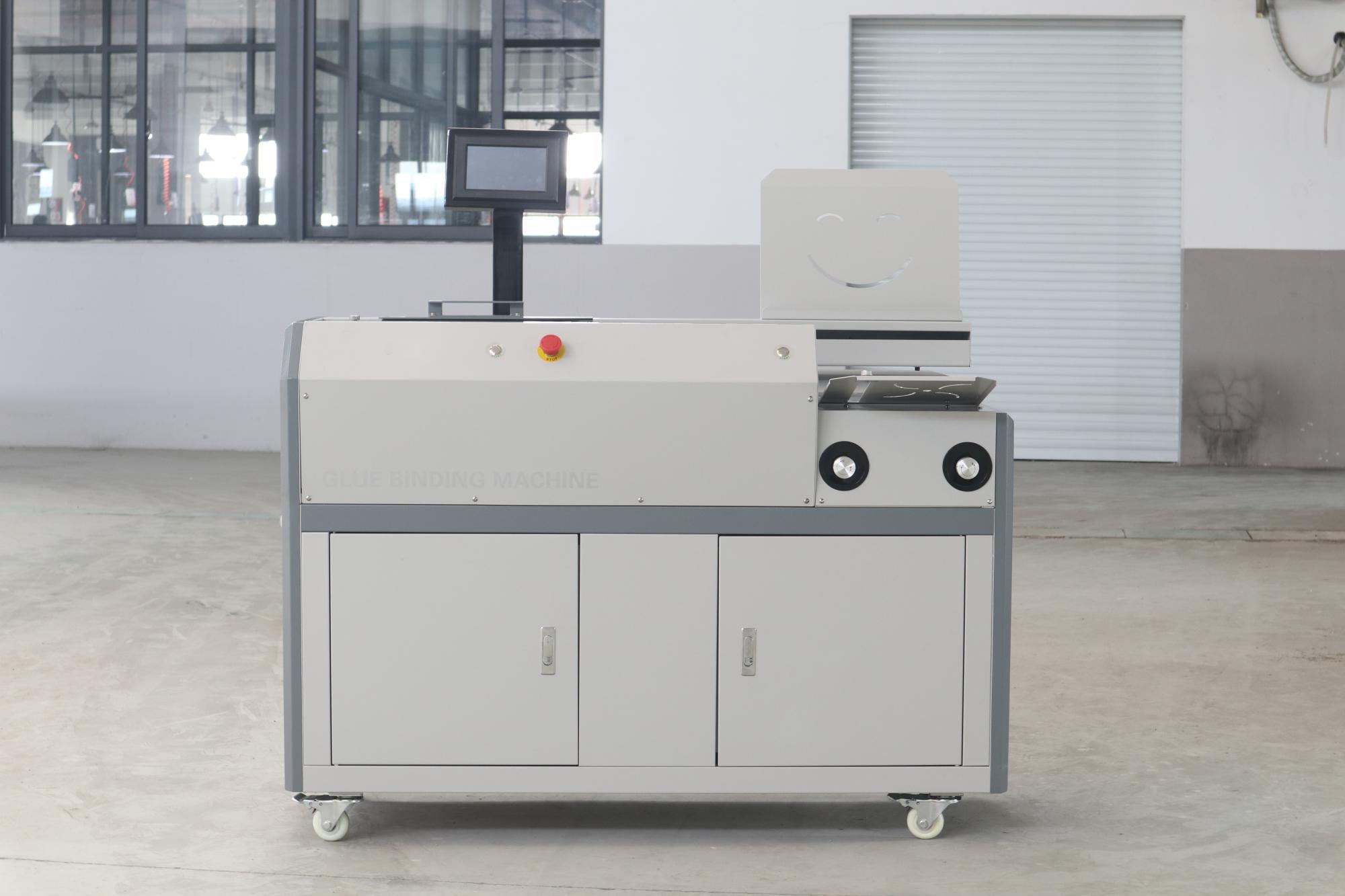
Commercial print shops and medium-to-high volume binderies rely on this category. These machines introduce significant automation. Automated clamping and nipping reduce operator fatigue and increase consistency. Touchscreen keypad controls allow for precise adjustments and rapid setup. They easily handle books up to 2-1/4 inches (55mm) thick. Many mid-range models offer interchangeable EVA and PUR tanks. This flexibility allows a print shop to switch adhesives based on the specific requirements of the job. Advanced mid-range units feature closed-loop PUR systems. These systems melt the adhesive in a sealed bag, pumping it directly to the extrusion nozzle. This eliminates ambient moisture exposure and drastically reduces daily cleaning requirements. Integrating a robust Perfect Binding Machine at this level dramatically improves daily throughput.
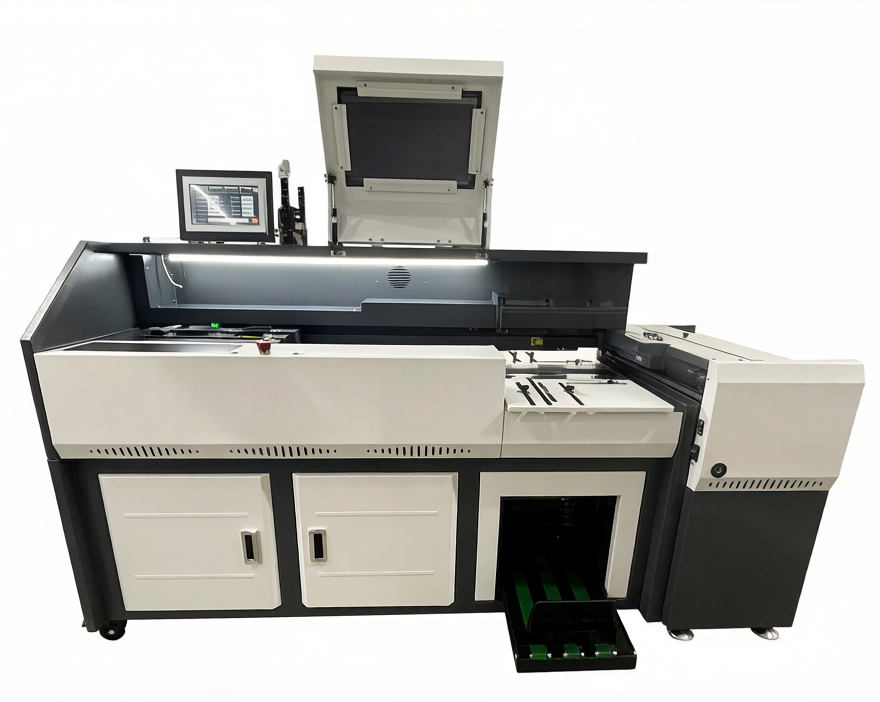
High-volume production facilities and enterprise in-house printing departments deploy these massive systems. Industrial binders offer direct integration with digital presses. Systems like RISO inline configurations provide seamless printer-to-binder booklet and book making. They feature automated barcode matching to ensure the correct cover wraps around the corresponding text block. Zero-makeready capabilities allow the machine to adjust on the fly for varying book thicknesses without stopping production. These systems maintain continuous high-speed cycle rates, outputting thousands of books per shift. Industrial systems incorporate high-capacity vacuum extractors to remove paper dust generated by the milling station. Accumulating paper dust poses a severe fire hazard and degrades the adhesive quality. They require dedicated operators, three-phase power, and extensive floor space for inline cooling conveyors.
Manufacturers often advertise impressive "cycles per hour" metrics. A cycle represents the machine completing one mechanical rotation. Cycle speed does not equal finished books per hour. True throughput accounts for the entire operational workflow. You must factor in operator loading time. Cover feeding mechanisms occasionally jam and require clearing. Adhesive replenishment takes time, especially when melting new EVA blocks. When evaluating equipment, calculate the realistic net production rate rather than relying solely on the theoretical maximum cycle speed. A machine rated for 500 cycles per hour might only yield 350 finished books per hour in a real-world production environment.
Production requirements dictate necessary machine specifications. Evaluate the minimum and maximum spine thickness capacities. Ensure the equipment meets the standard 55mm commercial requirement if you produce thick catalogs. Assess the machine's ability to handle oversized formats. A3 landscape books require a longer clamping carriage and wider gluing mechanisms. Conversely, unusually small formats might slip through standard clamps. Verify that the machine accommodates the exact dimensions of your most frequent print jobs. Test the machine with your thinnest and thickest paper stocks to confirm the clamping mechanism holds them securely during the milling process.
Short-run digital printing requires frequent job changeovers. Assess the value of automated setup features. Touchscreen interfaces allow operators to input book dimensions quickly. The machine then automatically adjusts the clamp width, milling depth, and nipper pressure. This automation replaces manual caliper adjustments, which are time-consuming and prone to human error. Job memory recall features save parameters for repeat print runs. This capability drastically reduces makeready time when a client orders a reprint of a previous catalog. Faster changeovers directly increase the number of billable jobs a shop can complete in a single shift.
Modern binding equipment requires skilled operation. Address the learning curve associated with setting the machine correctly. Operators must understand how to adjust milling depth to expose fibers without shredding the paper. They must monitor glue temperature to maintain optimal viscosity. Setting the correct nipper pressure ensures a square spine without crushing the text block. Highlight essential safety features during training. Light curtains prevent the clamp from closing if hands are in the way. Emergency stops must be easily accessible. Enclosed milling stations protect operators from paper dust and sharp blades. Regular safety audits prevent workplace injuries and equipment damage.
Hot-melt adhesives generate fumes during operation. Detail the ventilation requirements for your facility. Proper exhaust systems remove hot-melt fumes, ensuring a safe and comfortable working environment. PUR machines demand even stricter maintenance protocols. Operators must purge the nozzles and seal the system from ambient moisture at the end of every shift. Failure to execute these routines results in adhesive curing inside the application system, leading to severe downtime and expensive repairs. Establish a strict daily maintenance log to track cleaning routines and adhesive replenishment.
Binding equipment demands specific facility infrastructure. Outline the electrical requirements before purchasing. Industrial units frequently require 3-phase power, which may necessitate electrical upgrades in smaller shops. Remind buyers to allocate sufficient floor space. The machine itself is only one part of the workflow. You must provide space for cooling racks where books can rest while the adhesive sets. Furthermore, a three-knife trimmer is an essential companion to the perfect binding process. Ensure your floor plan accommodates the trimmer and the necessary staging areas for unfinished and finished books. Proper workflow layout minimizes material handling and reduces production bottlenecks.
Request bound samples of your specific paper stock from equipment manufacturers to verify adhesive performance and spine flexibility.
Schedule a live or virtual machine demonstration to observe the changeover process, interface usability, and actual throughput speeds firsthand.
Measure your available floor space to ensure adequate room for the binder, vertical cooling racks, and the required three-knife trimmer.
Audit your facility's electrical and ventilation infrastructure to confirm compatibility with high-capacity hot-melt or PUR systems.
A: Commercial machines typically handle book blocks up to 2-1/4 inches or 55mm in thickness. Industrial models designed for massive directories can exceed this capacity. Always verify the maximum clamp opening of the specific model to ensure it meets your production needs.
A: Yes, but the adhesive choice is critical. While traditional EVA adhesive struggles to grip coated paper, machines equipped with PUR adhesive handle coated and glossy stocks exceptionally well. PUR creates a chemical bond that easily penetrates glossy coatings.
A: Perfect binding uses milled edges and a strong, flexible adhesive to create a retail-quality, paperback-style finish with a printable spine. Comb binding punches physical holes through the pages and uses a plastic spine, typically utilized for training manuals that must lay completely flat.
A: Yes. By bypassing the cover feeding and nipping stages, many perfect binders function efficiently as padding machines. The operator simply applies adhesive to the milled edge of the paper stack to create tear-off notepads or carbonless forms.
A: EVA hot-melt adhesive cools and sets within minutes, allowing for almost immediate trimming and handling. PUR adhesive requires 12 to 24 hours to fully chemically cure with ambient moisture before the book can withstand heavy use.
A: Yes. Perfect binders leave rough, uneven edges on three sides of the bound book. A guillotine cutter or a specialized three-knife trimmer is necessary to trim the top, bottom, and face for a final retail finish.
A: PUR systems require rigorous daily maintenance. Operators must clean the application areas, purge the nozzles, and completely seal the adhesive system from ambient moisture. This prevents the glue from permanently curing and ruining the internal machine components.