Phone: +86-178-1682-8319 | Email: sales@befitter.com.cn

Views: 0 Author: Site Editor Publish Time: 2026-01-08 Origin: Site
In today’s fast-paced industries, precision is everything. Have you ever wondered how large print shops or packaging companies achieve such accurate cuts? A high-quality Paper Cutting Machine plays a key role.
In this ultimate guide, we’ll explore the essential aspects of Paper Cutting Machines. From understanding their types and features to choosing the right one for your needs, we’ve got you covered.
A Paper Cutting Machine is an essential tool used in various industries to cut paper, cardboard, plastic, and other materials with high precision and efficiency. It works through several mechanisms that often involve sharp, durable blades moving through the material at exact angles, providing clean and accurate cuts. Modern machines are equipped to handle multiple materials and varying thicknesses, ensuring that cuts are smooth without any jagged edges.
For businesses in printing, packaging, and crafts, choosing the right Paper Cutting Machine is crucial. The machine selected must match the specific needs of the business, such as cutting capacity, precision, and material compatibility. Understanding the different types of Paper Cutting Machines and their capabilities is key to making an informed decision that will enhance operational efficiency.
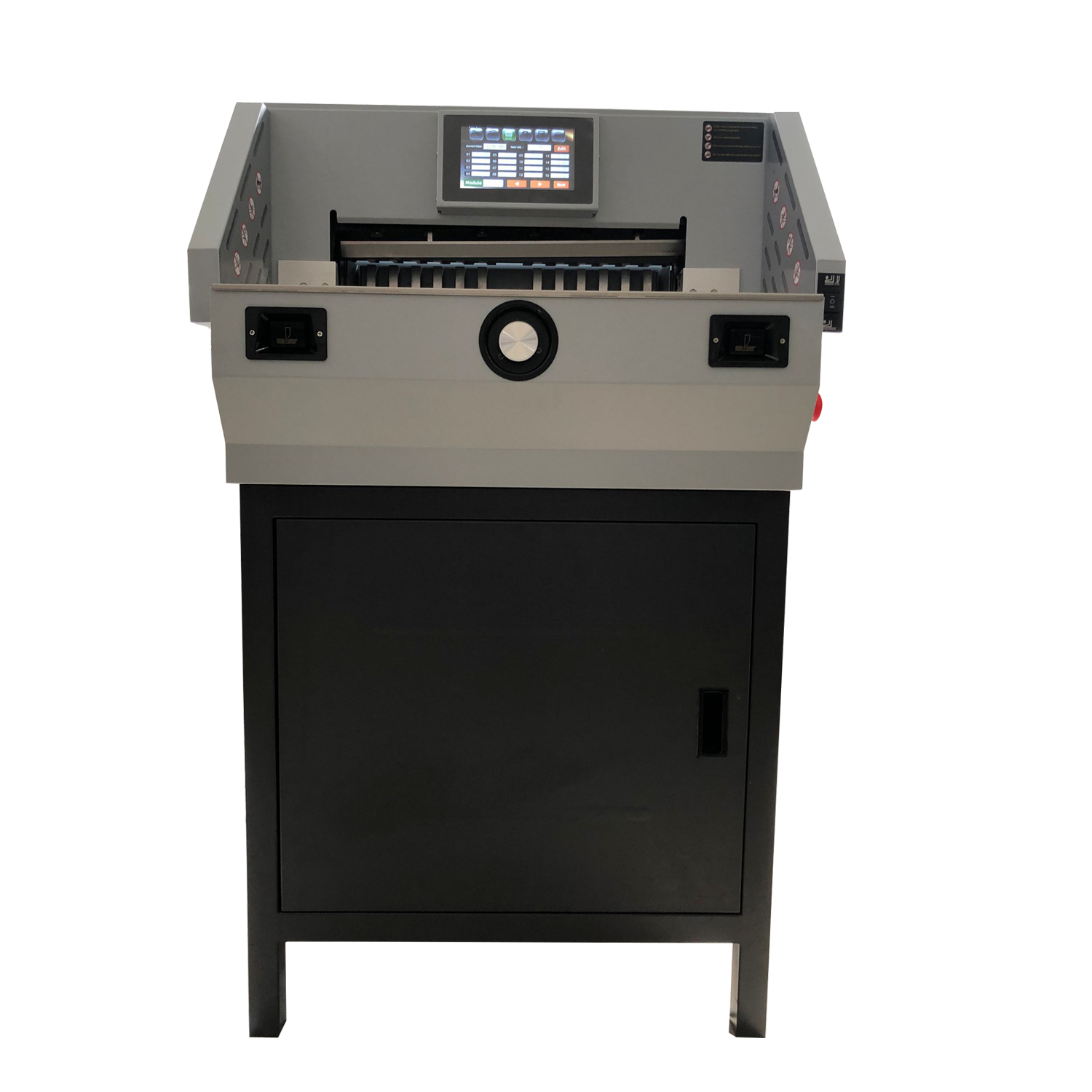
Guillotine cutters are one of the most popular choices for commercial operations. These machines use a long, straight blade that moves vertically to cut through large stacks of paper. They are known for their precision and are ideal for high-volume environments, such as printing shops or large production lines, where cutting a large number of paper sheets to a consistent size is necessary. Guillotine cutters provide clean cuts on thick materials, making them indispensable for commercial printing and large-scale packaging operations.
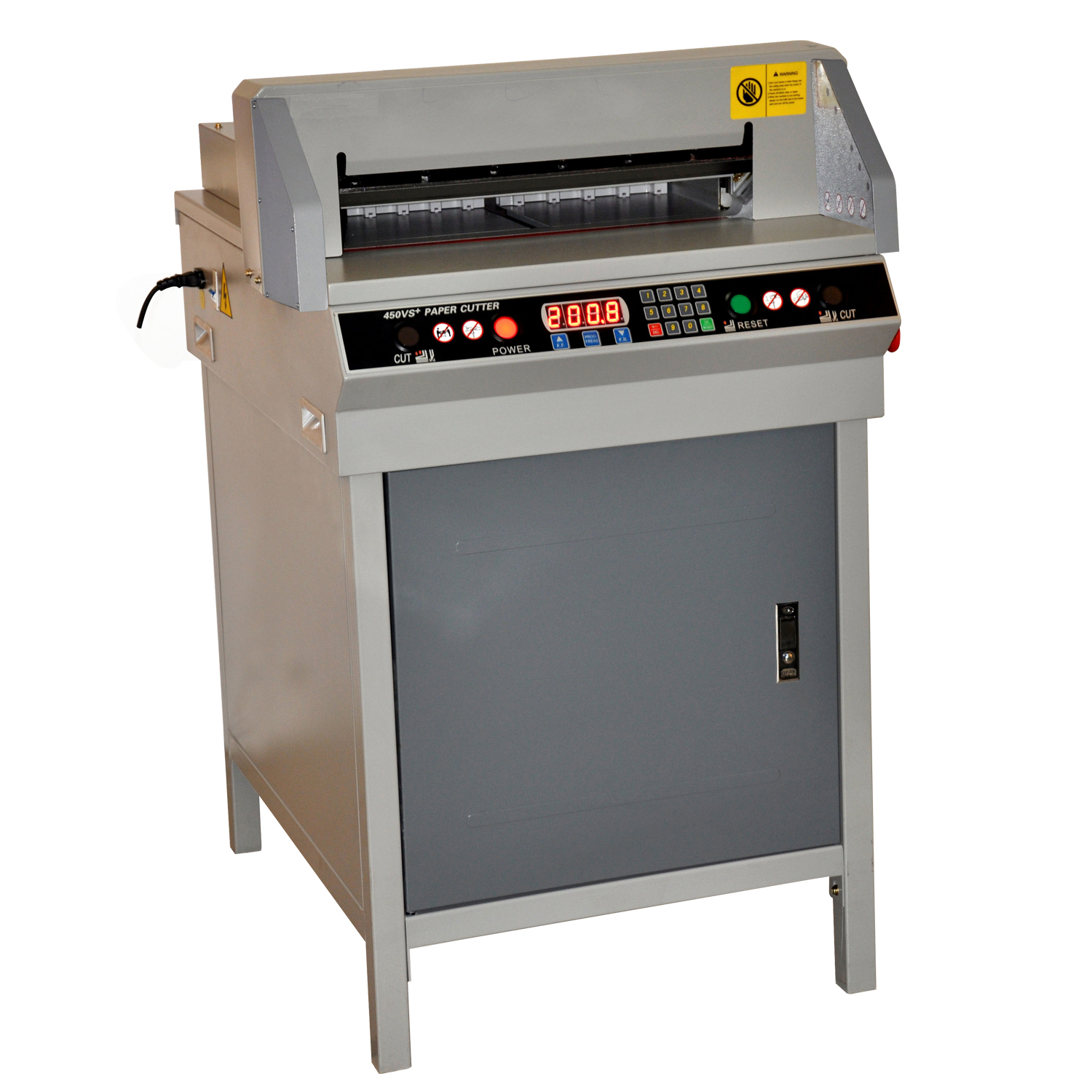
Unlike guillotine cutters, rotary trimmers use a circular blade that moves along a rail, offering a different cutting mechanism. These are typically used in lower volume applications, such as crafting, photo trimming, or even precision work on thin materials. Rotary trimmers are known for providing smooth, clean cuts, particularly when cutting delicate paper, photographs, or films. They are more portable than guillotine cutters and ideal for tasks where detailed and intricate trimming is needed.
Hydraulic paper cutting machines are heavy-duty machines that use hydraulic power to move the blade, offering high precision even for thick stacks of paper or heavy materials. These machines are often equipped with programmable controls, which allow for easy adjustment of cutting patterns, making them perfect for mass production environments. Hydraulic cutters are built for high-volume production and are essential for businesses requiring robust performance and consistent output.
Electric Paper Cutters are designed for industrial use, offering automated cutting processes. These machines come with programmable settings and digital controls, allowing users to set precise cutting dimensions and automate repetitive tasks. Electric cutters are ideal for high-volume environments, as they combine efficiency and accuracy, ensuring consistent results. They also tend to be more user-friendly, with intuitive controls and minimal manual input, which reduces human error and increases overall productivity.
Paper Cutting Machines are used across various industries, with each sector requiring specific features and capabilities from the machine.
● Commercial Printing: In the printing industry, precision is crucial. Whether for brochures, magazines, or books, paper cutting machines provide the uniform cuts necessary to create high-quality printed materials. These machines ensure that paper sheets are cut to exact sizes, which is essential for maintaining quality and consistency in printed products.
● Packaging: In packaging industries, cutting paper and cardboard is essential for creating boxes, custom packaging, and other product forms. Accurate cuts are necessary to ensure that packaging is precise, functional, and aesthetically pleasing. Whether for retail packaging, shipping boxes, or custom designs, a Paper Cutting Machine ensures that the material is cut to the right size and shape every time.
● Craft and Design: For smaller-scale operations, such as craft stores, design studios, and hobby businesses, Paper Cutting Machines are used to create intricate designs and custom pieces. These machines allow users to work with different materials, such as cardstock, fabric, or plastic, to create detailed and accurate cuts for a wide variety of products, from greeting cards to decorative pieces and other creative projects.
The versatility of Paper Cutting Machines extends beyond just printing and packaging. They are also used in industries like signage, textiles, and composite material processing. For example, in the signage industry, these machines can be used to cut vinyl or film materials to create custom signs or decals. In textile industries, they may be used to cut fabric patterns for clothing or upholstery. The ability to adapt to various materials makes Paper Cutting Machines a valuable investment for businesses in many sectors.
Before investing in a paper cutting machine, it’s essential to consider the size and thickness of the materials you will be cutting. Machines are designed to handle varying cutting capacities, and choosing the wrong machine can lead to inefficiencies. If your operation requires cutting larger or thicker materials, you will need a machine with a higher cutting capacity. If you're working with standard paper, a smaller machine might be sufficient.
Machines are generally categorized based on their cutting capacity:
Machine Type | Max Cutting Capacity | Ideal Use Case |
Guillotine Cutters | Up to 360 sheets | High-volume commercial printing |
Rotary Trimmers | Up to 30 sheets | Small-scale trimming and crafts |
Hydraulic Machines | Over 500 sheets | Industrial applications and bulk cutting |
Electric Paper Cutters | Up to 1000 sheets | High-volume automated cutting for packaging |
Precision plays a critical role, particularly in the printing and packaging industries. A paper cutting machine with accurate cuts ensures a professional finish, reducing the need for rework or material wastage. Technologies like laser-guided systems and programmable controls further enhance cutting precision.
For businesses in the packaging or label production sector, where uniform cuts are crucial for product aesthetics and functionality, investing in a high-precision cutting machine is a must.
There are three primary types of automation levels in paper cutting machines: manual, semi-automatic, and fully automatic.
● Manual Machines: These require the operator to physically move the blade, typically used for small batches and where precision is not critical.
● Semi-Automatic Machines: These machines automate some parts of the process, such as measuring and moving the material, but still require human input to control the blade.
● Fully Automatic Machines: Designed for large-scale operations, these machines are equipped with automation features that enable fast, precise cuts without manual intervention. They are ideal for businesses with high production volumes.
The quality and durability of the blade are crucial to the overall performance of the paper cutting machine. Blades made from high-grade steel or tungsten ensure that the machine maintains sharpness for longer periods, reducing the need for frequent replacements. Some advanced models feature self-sharpening mechanisms that maintain cutting precision with minimal maintenance.
For businesses looking to reduce downtime, it’s important to invest in a machine with durable blades and easy blade replacement options.
Safety is paramount when operating any type of machinery, especially paper cutting machines. Modern machines come equipped with various safety features to protect the operator:
● Blade Guards: Prevent accidental contact with the blade.
● Dual-hand Operation: Ensures that both hands are away from the cutting area during operation.
● Emergency Stop Functions: Allow immediate shutdown in case of emergencies.
These safety measures help reduce the risk of injury in a fast-paced production environment.
Most modern paper cutting machines come with user-friendly controls that simplify the cutting process. Digital controls, touchscreen interfaces, and programmable memory allow users to store cutting settings for quick and consistent results. These features reduce the likelihood of human error and increase operational efficiency.
To keep your machine running smoothly, regular cleaning is essential. Dust, paper shavings, and other debris can affect performance and lead to damage over time. Lubricating the moving parts ensures that the machine operates smoothly and reduces friction, preventing premature wear.
Blades need regular maintenance to ensure that they remain sharp and effective. Some machines come with self-sharpening systems, while others require manual sharpening or replacement. Regular inspection of the blades will help identify wear and prevent issues like uneven cuts.
Like any mechanical equipment, paper cutting machines are prone to occasional issues. Common problems include paper jams, faulty motors, and inaccurate cuts. Knowing how to identify these problems and address them early can save time and money. If issues persist, it's best to contact a professional technician.
Choosing the right Paper Cutting Machine depends on several key factors, such as cutting capacity, precision, and safety features. Matching the machine’s capabilities to your business needs is essential for optimizing production efficiency and ensuring consistent results. Hangzhou Befitter Machinery & Electronic Co., Ltd. offers high-quality machines designed to meet various operational demands, providing reliable performance and value for businesses seeking precision and automation.
A: A Paper Cutting Machine is a device used to cut paper, cardboard, and other materials with high precision. It is used in industries like printing, packaging, and crafts to achieve clean, accurate cuts.
A: A Paper Cutting Machine uses a sharp blade, which moves either manually, semi-automatically, or fully automatically to cut materials. The machine’s precision depends on the type and automation level.
A: A Paper Cutting Machine offers several benefits, including increased efficiency, accuracy, and safety. It reduces manual labor and ensures consistent results for high-volume operations.
A: The cost of a Paper Cutting Machine varies based on its type and features. Basic models can start at lower prices, while fully automatic or hydraulic machines can cost significantly more.
A: When buying a Paper Cutting Machine, consider factors like cutting capacity, precision, safety features, and the level of automation that suits your business needs.


